
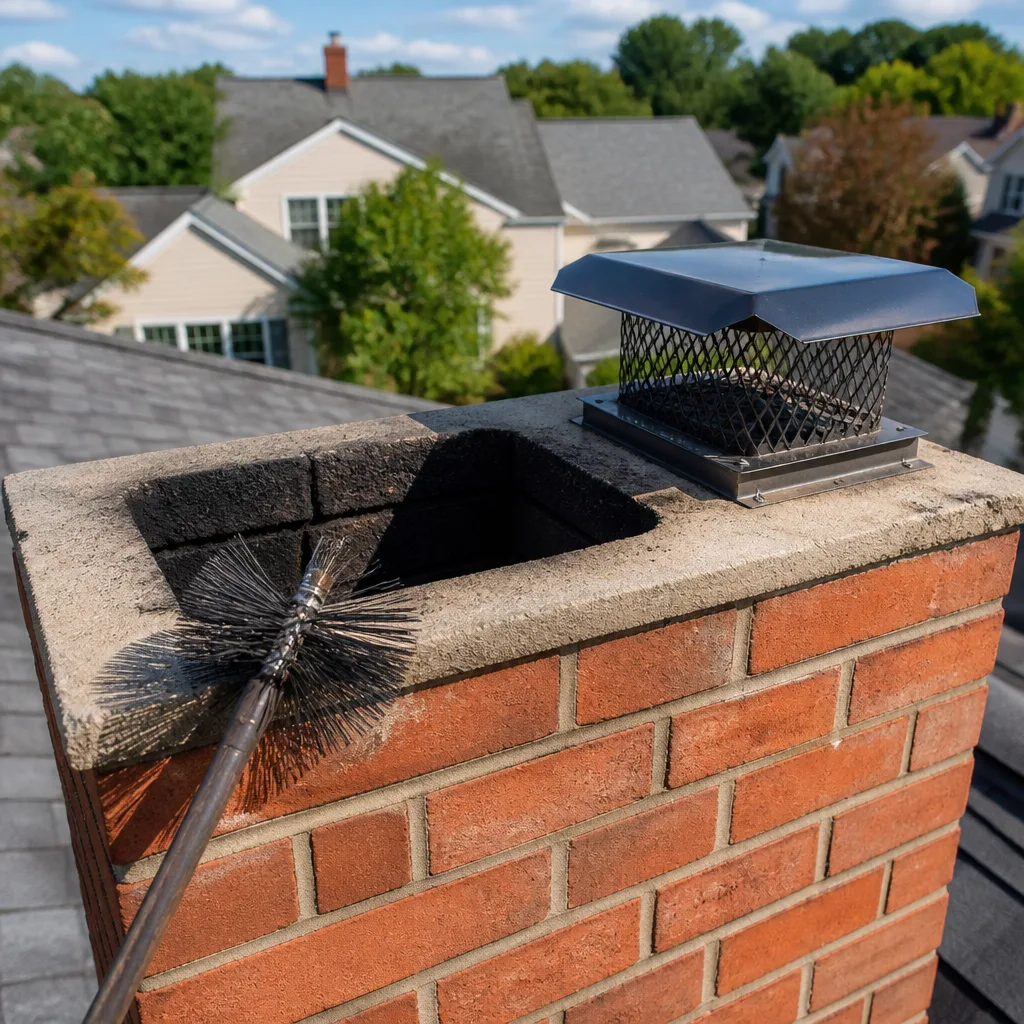
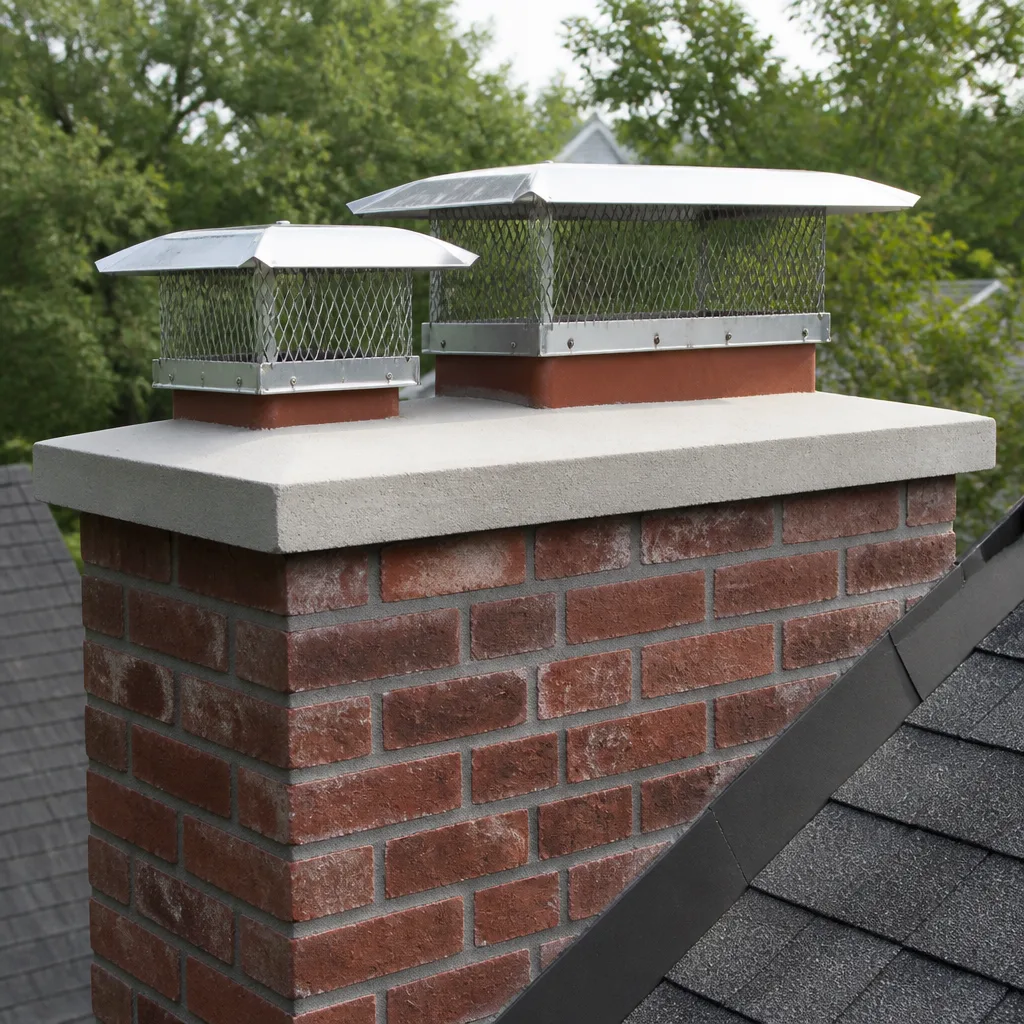
Level 1 sweep and inspection to the NFPA 211 annual standard - flue, crown, cap, and flashing checked and photographed
Chimney sweep logs do not sweep chimneys. They loosen some creosote - which then falls where a brush and vacuum still have to collect it.
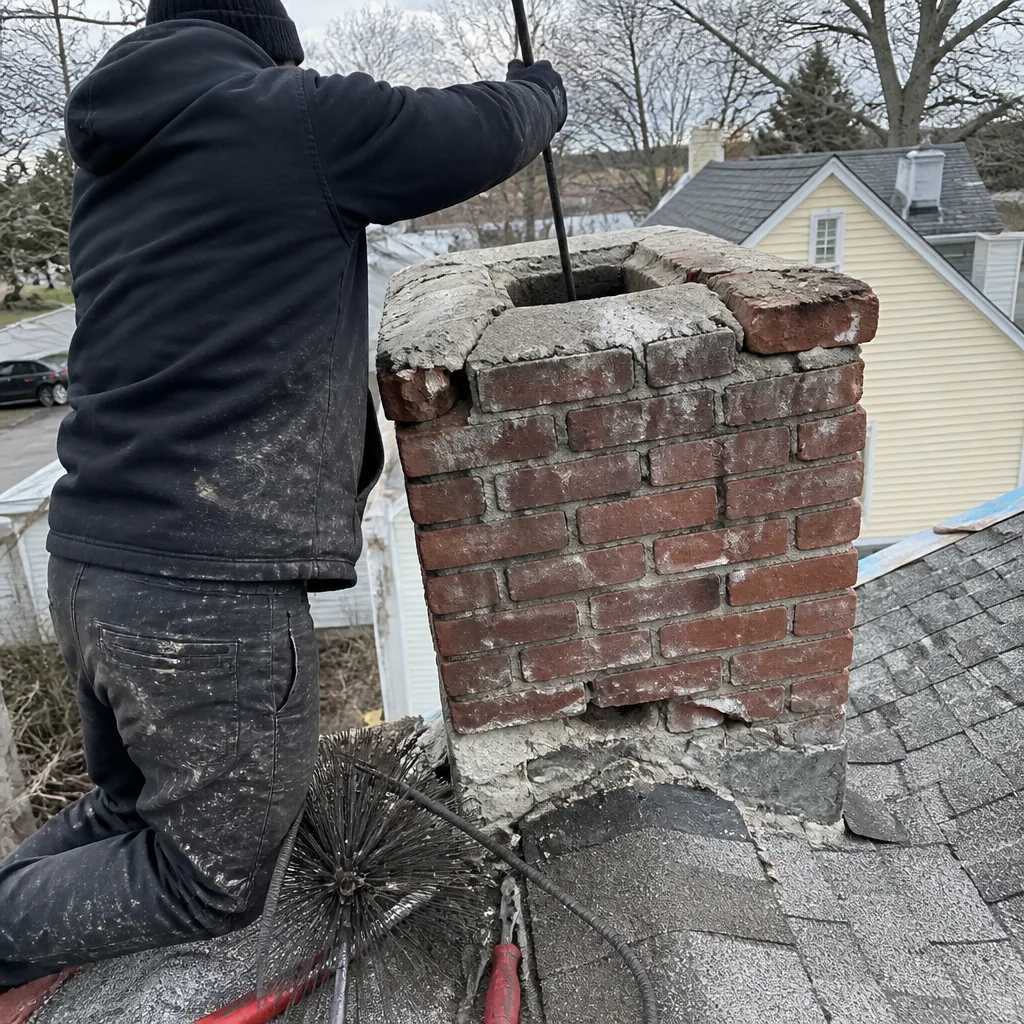 Before
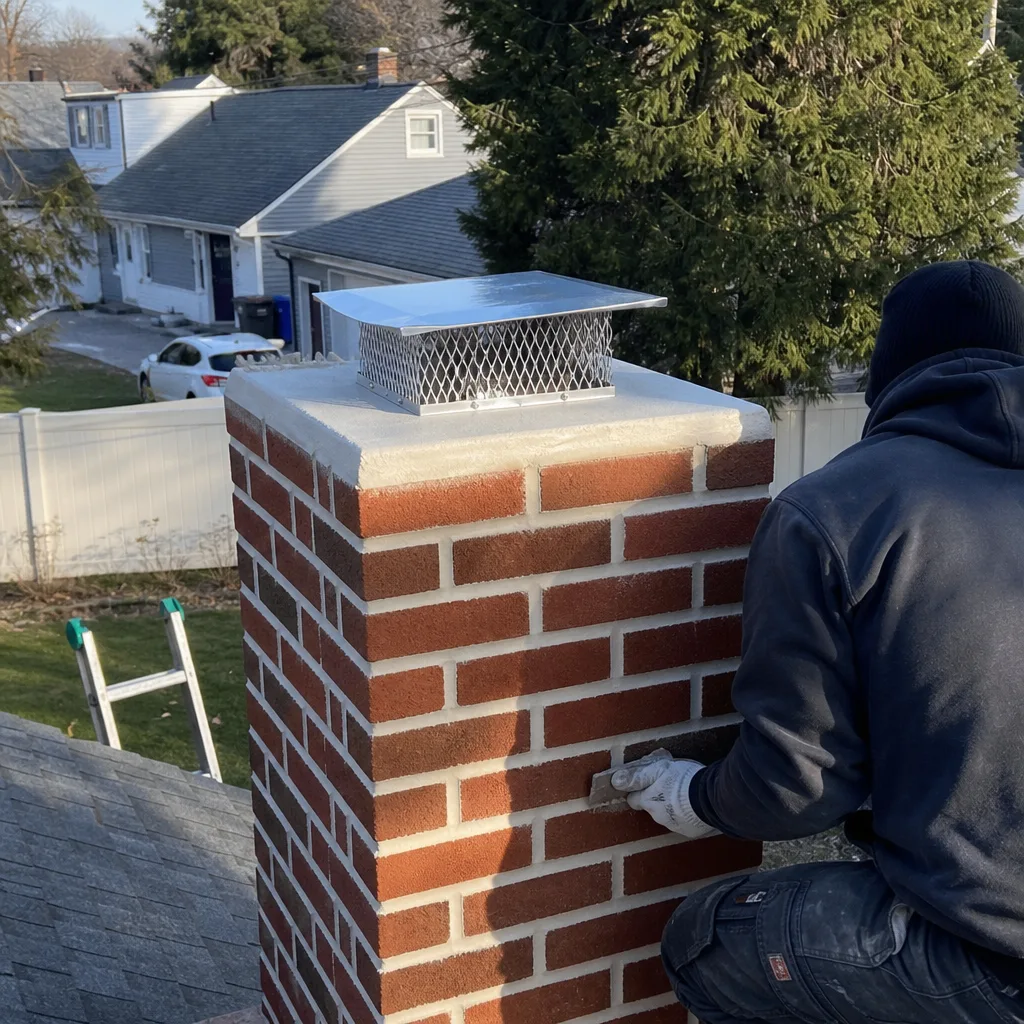 After
After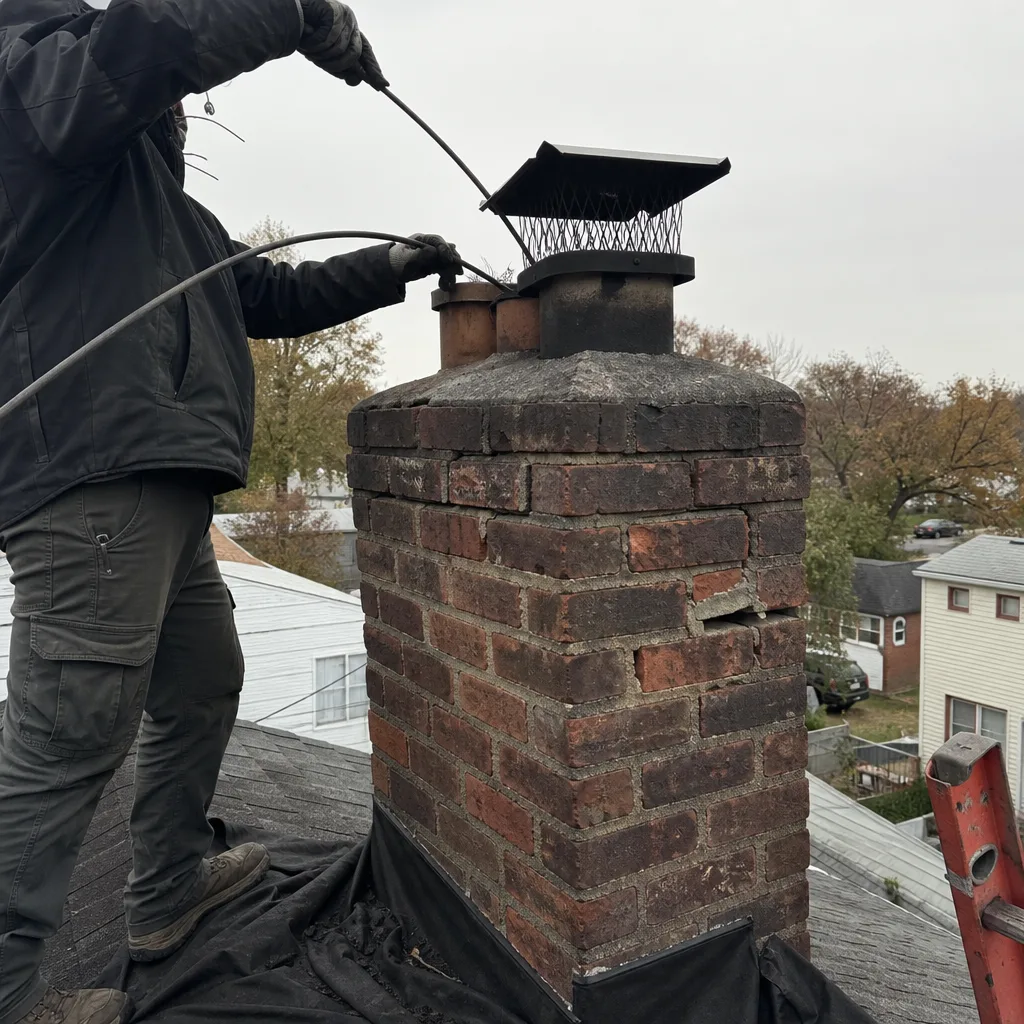 Before
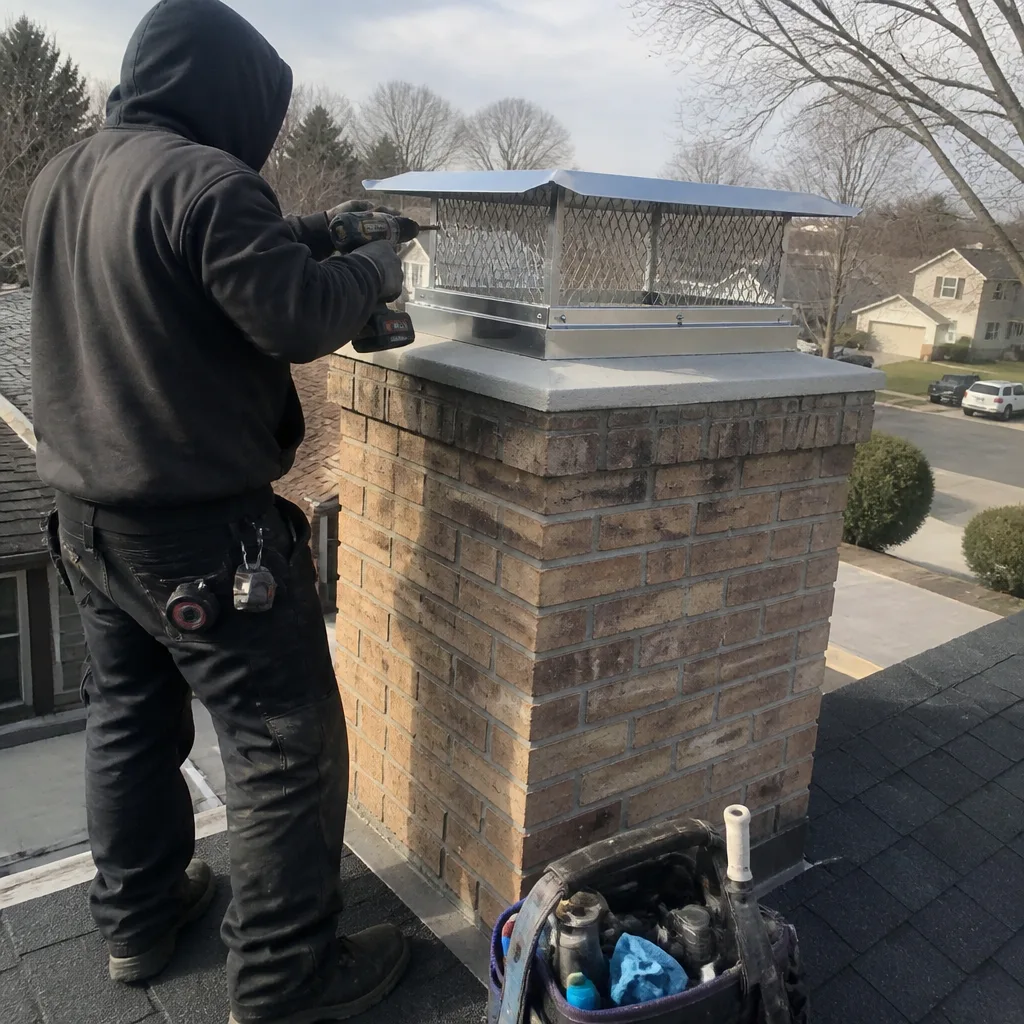 After
After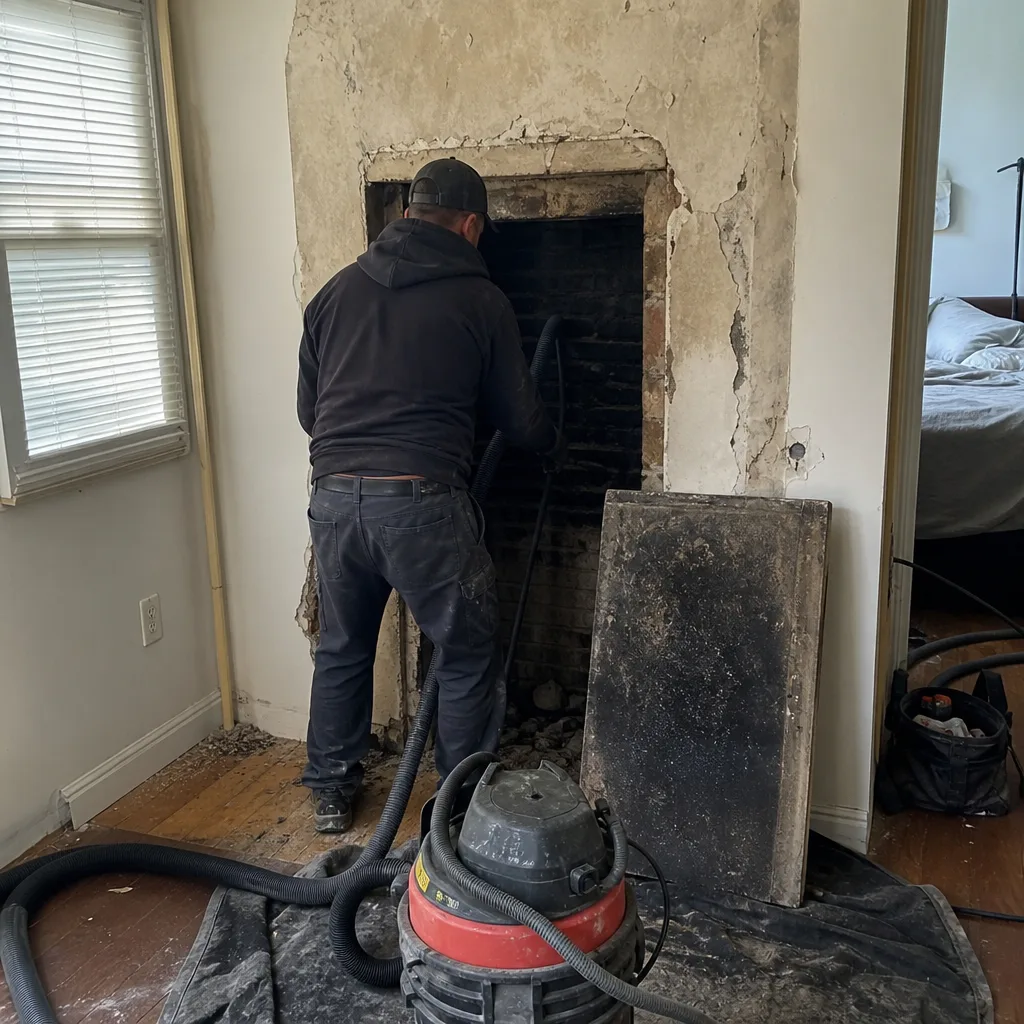 Before
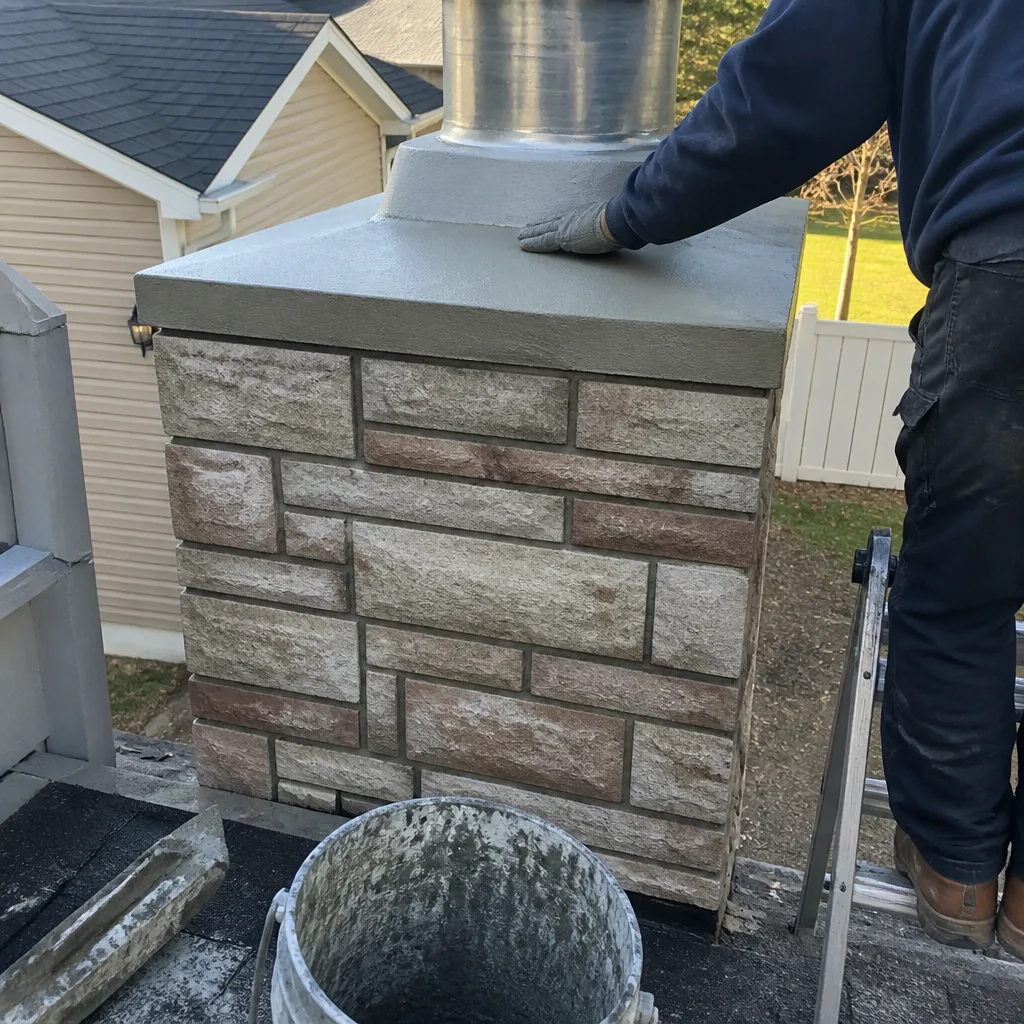 After
AfterHeatShield Flue Liner Replacement: The Hempstead Owner’s Guide
If your HeatShield flue liner has failed, we stock HeatShield-compatible replacement liner and install it in Hempstead homes for roughly $1,800 to $3,400 depending on flue height, access, and whether we’re relining the full run or a section. Most Hempstead jobs are done in a single day, and we carry the common sizes on the truck. The way you usually find out is a chimney sweep’s camera showing a cracked, spalled, or separated liner section during an annual inspection, or a puffback that left soot where it shouldn’t be.
Which HeatShield Models This Applies To
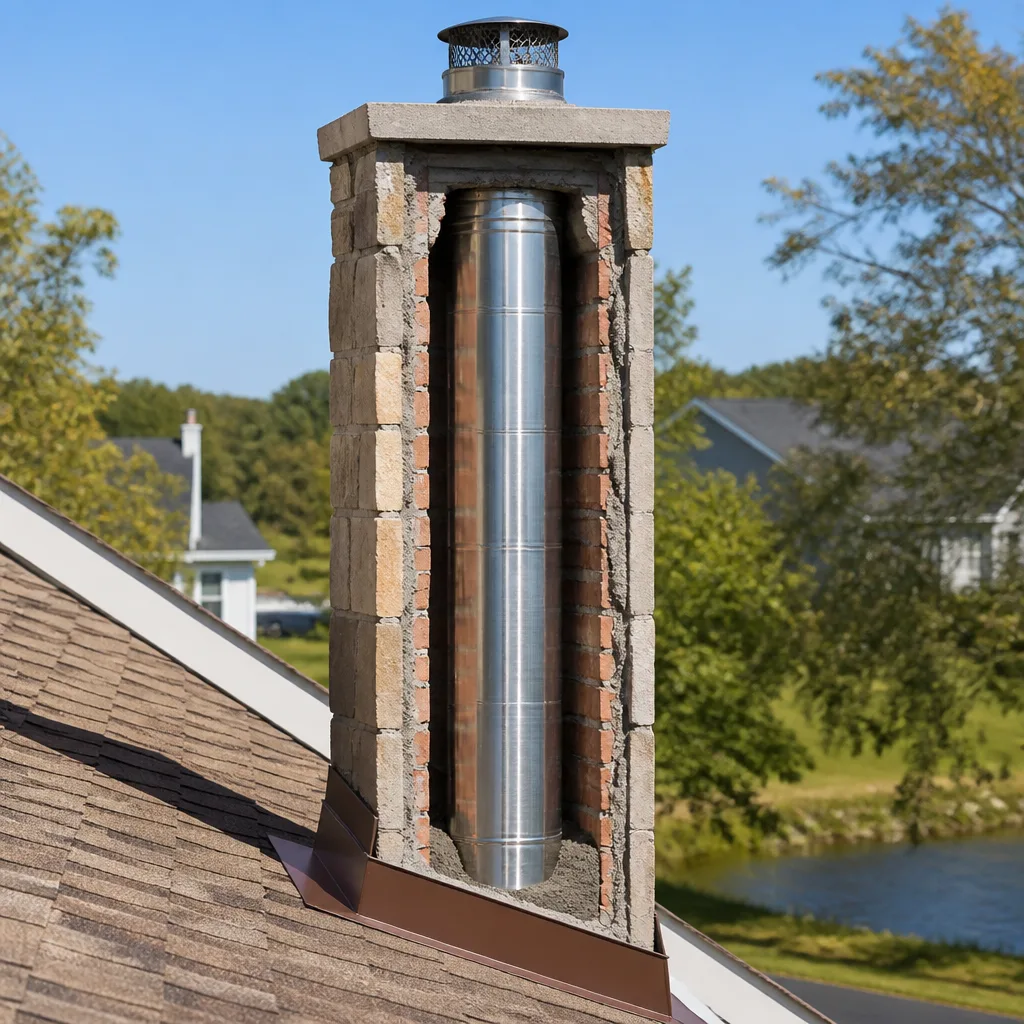
HeatShield is a poured-in-place ceramic liner system, not a rigid pipe. It’s installed as a wet mix that’s pumped around an inflatable form, so it cures hard and smooth against the inside of the existing flue. That’s important when it fails: you can’t just unthread a section and swap it like you would a stainless liner. HeatShield has two main series: the standard Cerfractory mix for most residential flues, and their CeCure sleeves for repairing specific damaged sections. The CeCure approach is a liner within a liner, used when the original HeatShield has cracked in one area but the rest is still sound.
When we show up in Hempstead, the first thing we do is run a camera up the flue and identify whether you have a full poured liner, a CeCure section, or a mix of both. The identifying information, if any remains, is usually on the damper plate or on paperwork from the original install. But most homeowners never got that paperwork, which is exactly why we don’t guess. We pull the camera footage and look at what’s actually there before we quote a replacement.
One thing to know about HeatShield specifically: it was never designed to be repaired by adding more material on top of a failed section. If the underlying flue tile has shifted or the original mix has separated from the clay, adding another layer just hides the problem for a season. In those cases, we recommend a full reline with a HeatShield recast or, depending on the flue condition, a stainless liner from DuraFlex or Gelco. We’re an independent shop, by the way. We install and service HeatShield products but we’re not affiliated with the manufacturer, so our recommendation is based on what your flue needs, not on moving a particular brand.
Signs Your HeatShield Flue Liner Replacement Is Failing
- Puffback or soot on the hearth after a fire. When a poured liner cracks, the flue can’t draw properly, and combustion gases push back into the room instead of up and out. This one gets our attention fast because it means the liner isn’t doing its job of keeping those gases contained.
- Chunks of ceramic material in the firebox or at the cleanout. HeatShield is a ceramic product, and when it spalls, it drops pieces that look like broken pottery or coarse sand. If you see this, save a piece so we can match it against the liner condition on camera.
- A flue that won’t hold a draft on cold starts. Nassau County winters are damp, and Hempstead homes near Hofstra with older chimneys tend to have a lot of cold masonry. A cracked HeatShield liner lets that cold air sit in the flue and fight the warm air trying to rise, so the fire smokes back until the chimney finally heats up.
- Whitish stains or efflorescence on the exterior brick. When the liner fails and moisture gets into the flue, it works its way through the masonry and leaves salt deposits on the outside. It’s a slow sign, but it’s a sign the inside isn’t sealed the way it should be.
- An inspection report from another company flagging “liner deterioration” with no photos. This is the one I tell people to slow down on. If somebody says your HeatShield liner failed but won’t show you the camera footage, get a second opinion. If it doesn’t need doing, I’ll tell you.
Replacement Cost & What’s Included
For a standard single-story Hempstead ranch with a 20- to 25-foot flue, a full HeatShield recast runs about $1,800 to $2,600. Two-story homes and chimneys with offset flues or tight access push that toward $2,800 to $3,400. If only a section has failed and a CeCure sleeve will solve it, you’re usually in the $1,200 to $2,000 range. The price we quote on the phone or at the door is the price on the invoice. No add-ons once the tools come off the truck.
Every HeatShield replacement we do in Hempstead includes the camera inspection with a photo report you keep, the liner material, the full installation, cleanup, and a written 90-Day Done Right Promise. If the work isn’t right, one call brings Wendell Pike and the crew back at no charge. We also knock $40 off any repair over $200, and seniors and veterans get 10% off always.
DIY or Call Us?
Here’s the honest split. You can absolutely inspect the visible parts yourself: look in the firebox for debris, check the damper plate for cracks or staining, and keep an eye on the exterior brick after heavy rain. That’s useful information and it helps you know whether to call us.
But replacing a HeatShield liner is not a homeowner job. It requires running a camera to see the full flue, knowing whether the surrounding masonry is sound, mixing the ceramic at the right consistency, and getting the form seated correctly so the new liner cures to the right thickness. Get the mix wrong or miss a section of damaged flue and you’ve spent a weekend creating a worse problem, one that vents combustion gases into your walls instead of out the top. Flue work is a safety issue, not a tile project. Call (516) 963-1068 and we’ll put eyes on it properly.
FAQs
A properly installed HeatShield liner typically lasts 20 to 25 years in Hempstead’s climate, though damp winters and heavy use can shorten that to 15 or so. The failure we see most often isn’t the liner wearing out from heat, it’s moisture working in from a failed crown or cracked masonry and breaking the bond over time.
Sometimes. If the damage is isolated to one section and the surrounding flue is still solid, a CeCure sleeve can target that area without a full recast. But if the original liner has separated from the flue tile or the underlying masonry has shifted, a patch won’t hold. That’s why the camera footage matters, and you’ll see it yourself before you spend a dollar. Call (516) 963-1068 and we’ll give you the straight answer.
Most Hempstead homes are done in four to six hours on site, with a day for the new liner to cure before you burn. Two-story chimneys or ones with offset flues add a couple hours. We tell you the window before we start, and if it slips, we call you.
We keep the standard HeatShield Cerfractory mix and the common CeCure sleeve sizes on the truck, along with DuraFlex and Gelco stainless liners for cases where a full replacement is the better call. If your flue needs a size we don’t have on hand, it’s usually in stock locally within a day. Call (516) 963-1068 for a free estimate and we’ll confirm the same day.
Written by Wendell Pike, Owner, Top Hat Chimney at Top Hat Chimney, serving Hempstead and nearby areas.