
Last updated September 10, 2026
Level 1 sweep and inspection to the NFPA 211 annual standard - flue, crown, cap, and flashing checked and photographed
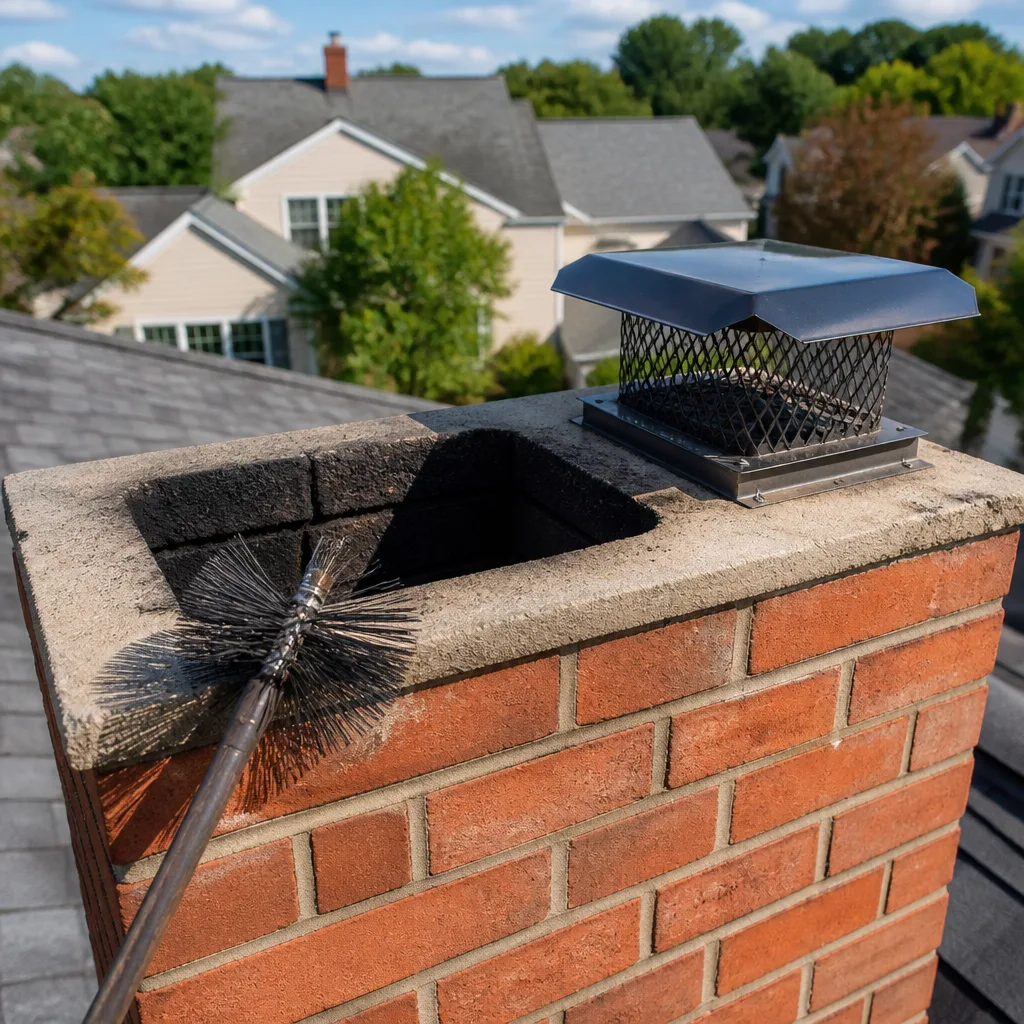
Chimney sweep logs do not sweep chimneys. They loosen some creosote - which then falls where a brush and vacuum still have to collect it.
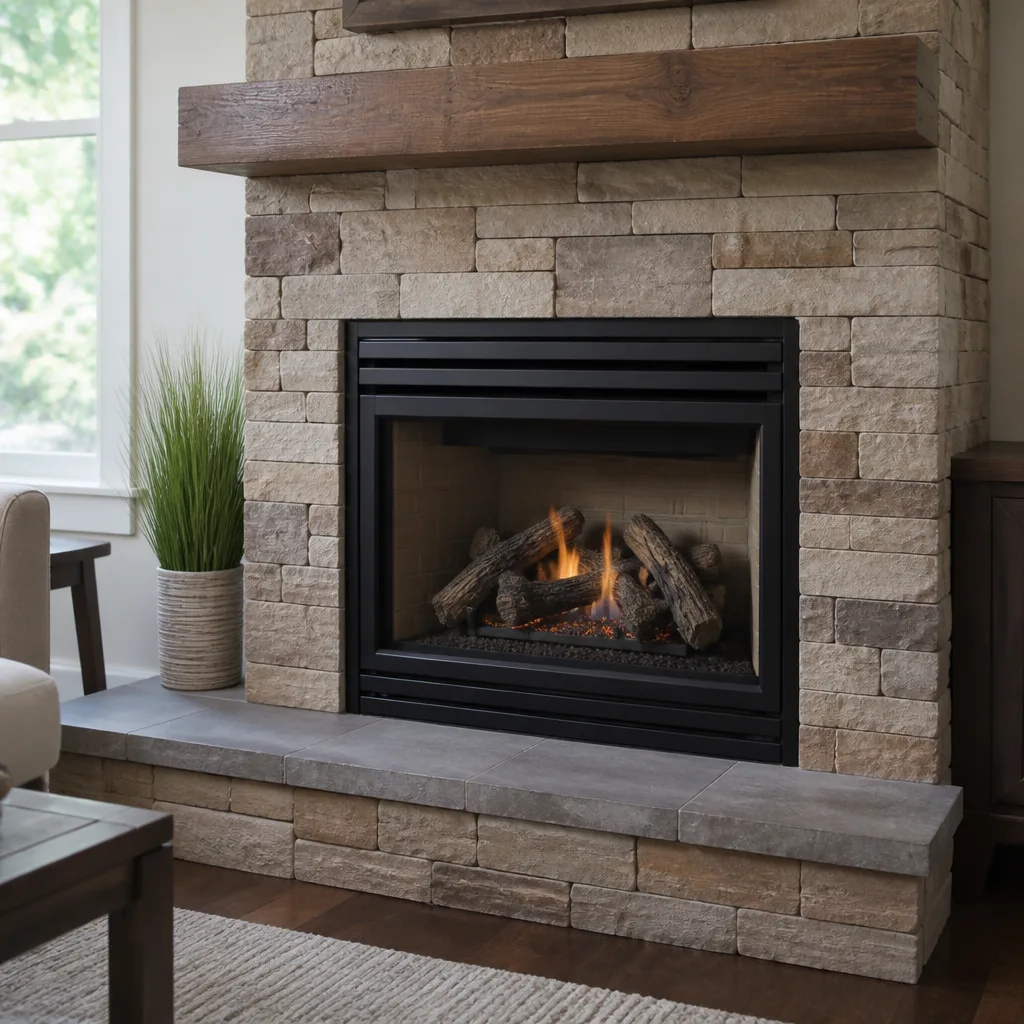
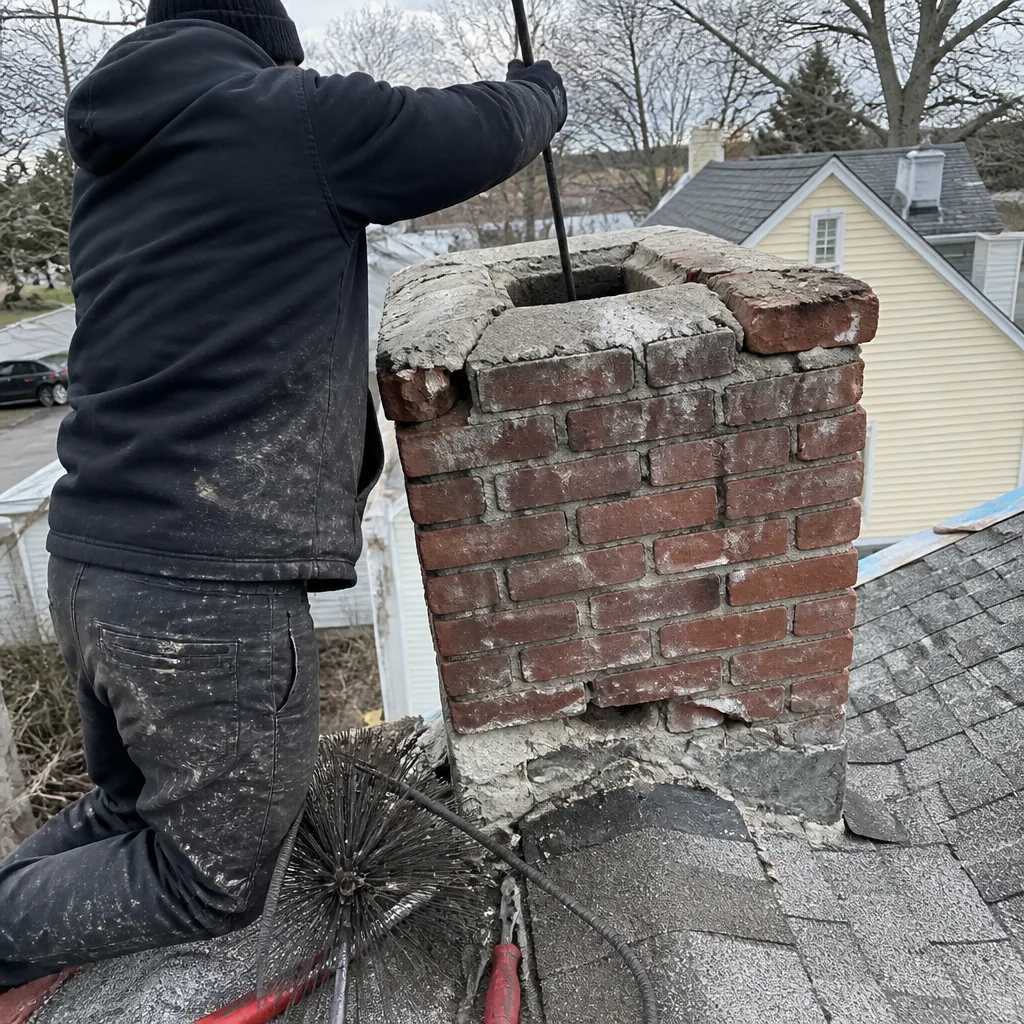 Before
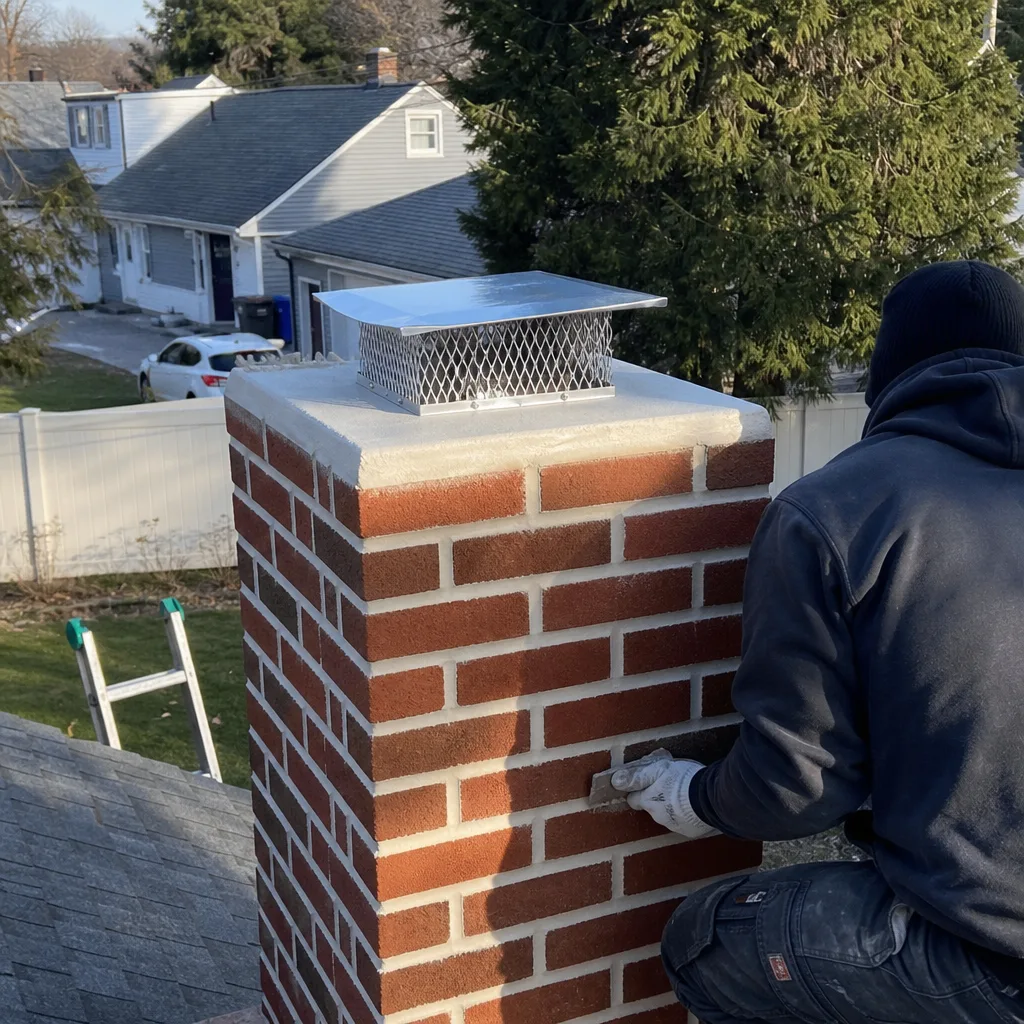 After
After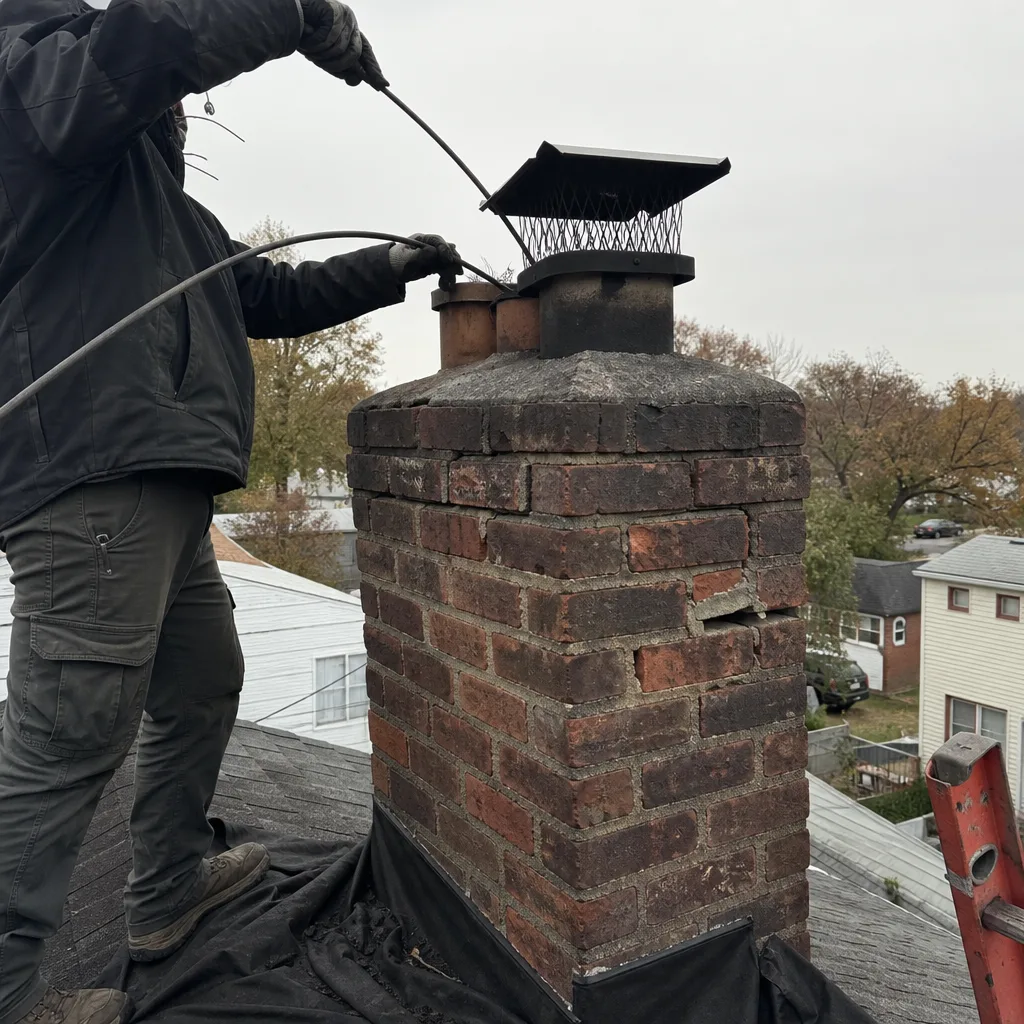 Before
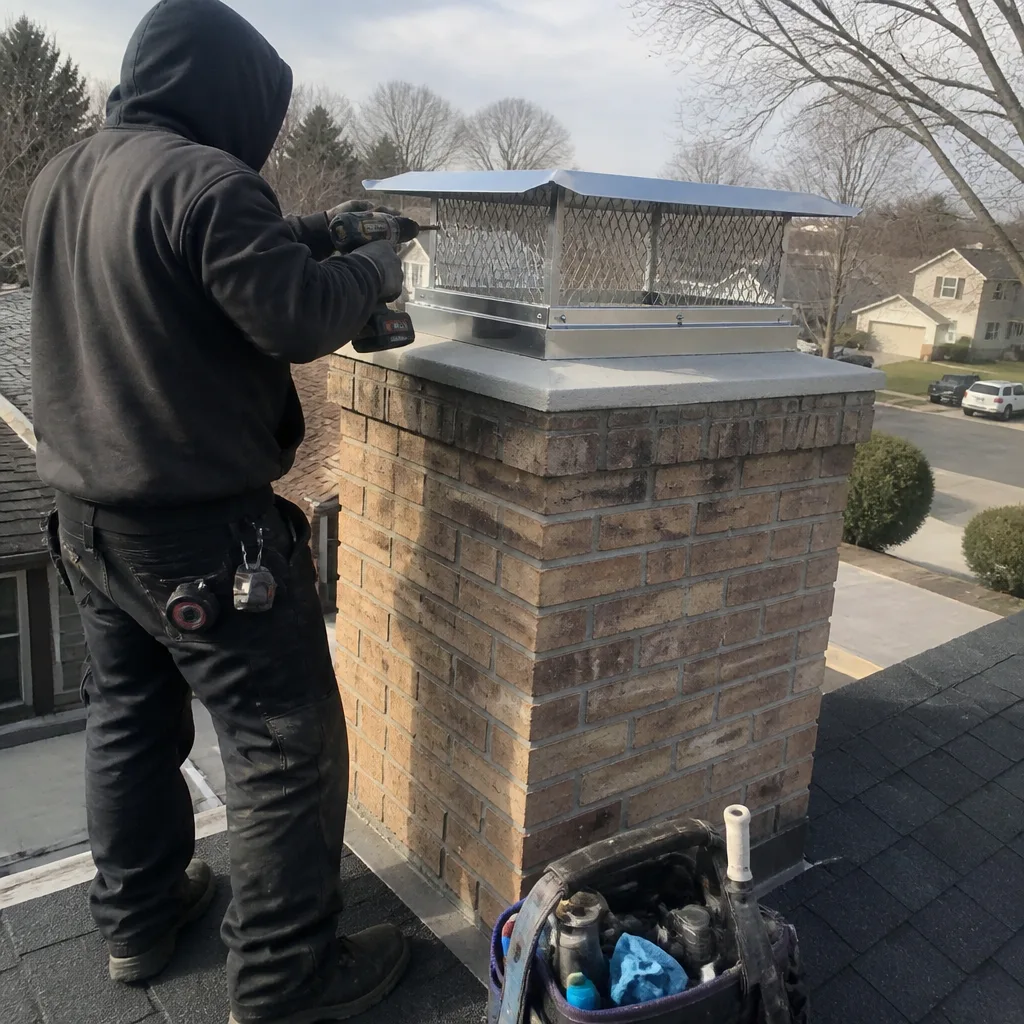 After
After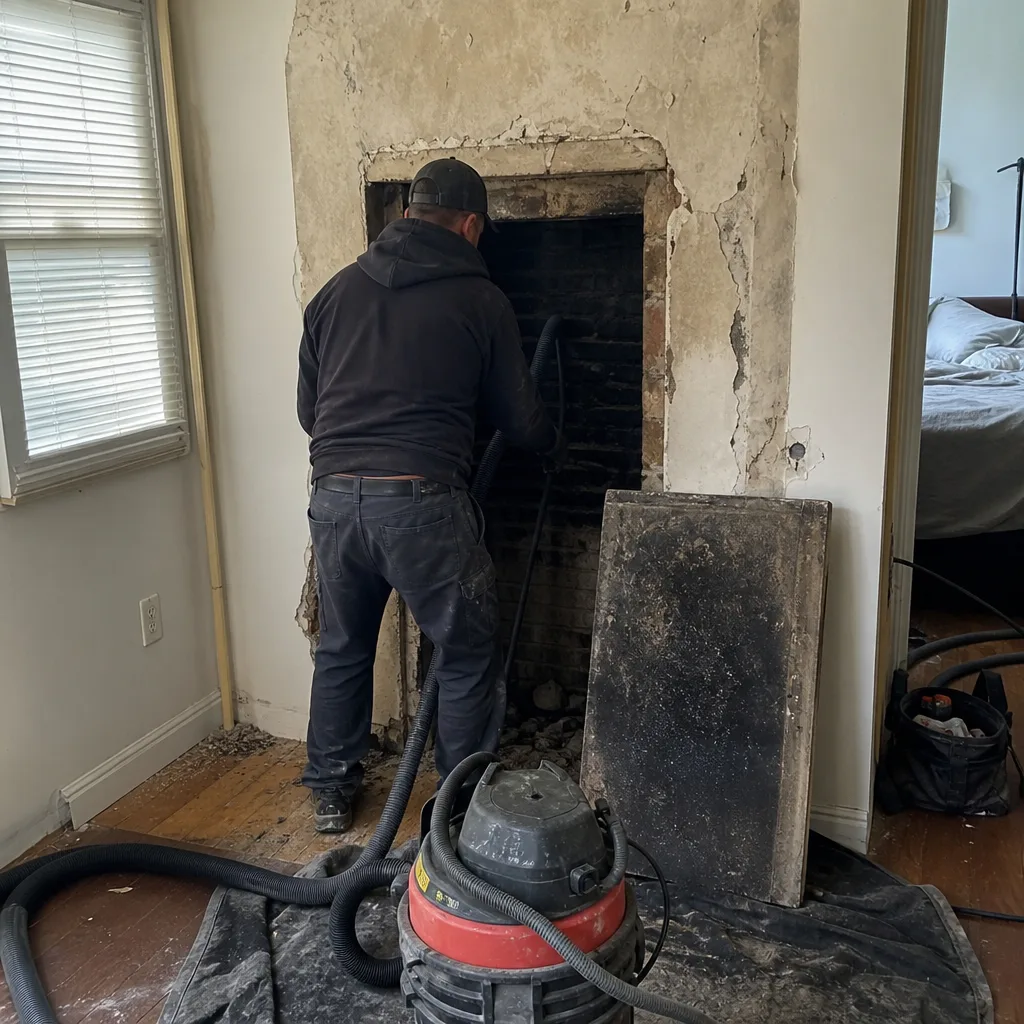 Before
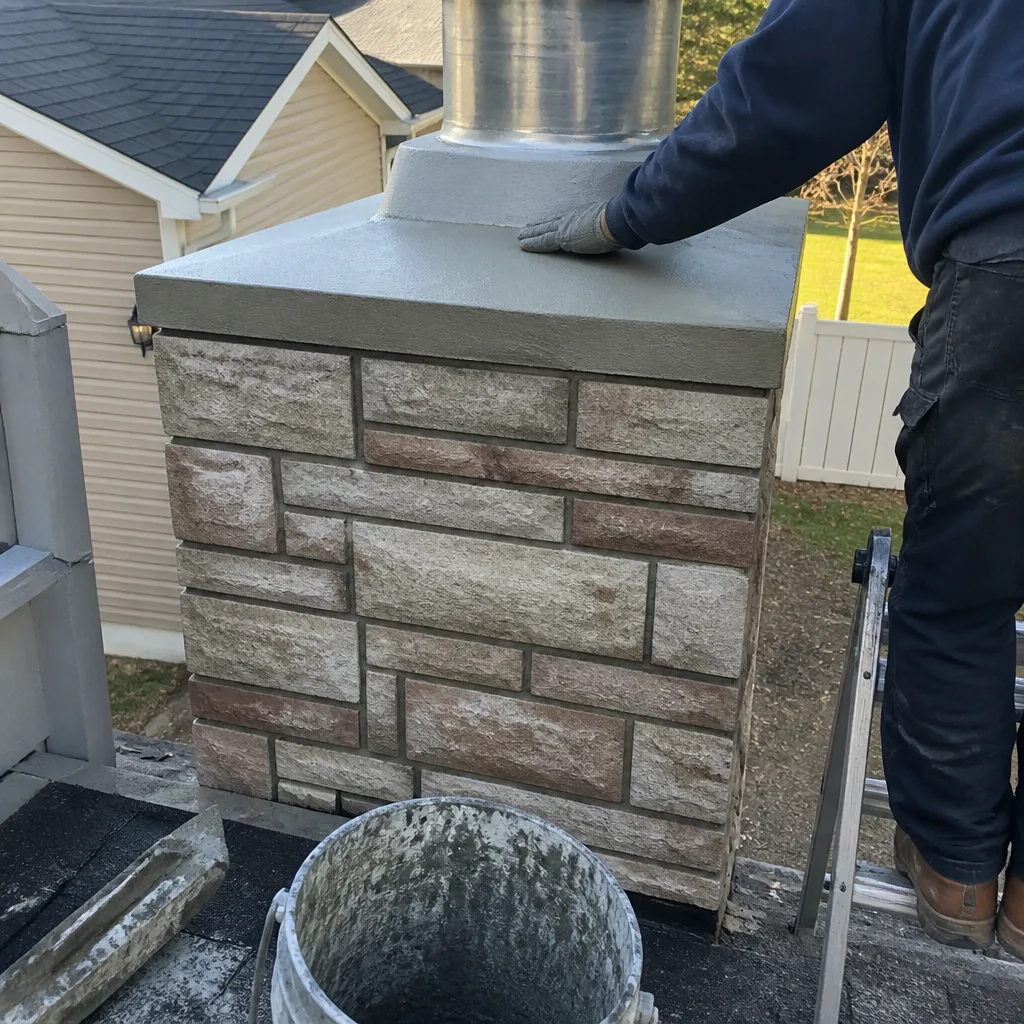 After
AfterChimney Cleaning Warning Signs: A Hempstead Homeowner’s Reference Guide
Most warning sign guides read like a scare manual: see a flake, call a sweep, open your wallet. That’s not how Wendell talks, and it’s not how chimneys actually work. The truth is, of the eight warning signs homeowners in Hempstead call us about, only two mean stop using the fireplace today and pick up the phone. Everything else falls on a spectrum from “schedule a sweep this month” to “write it down and keep an eye on it for a season.” This guide tells you which is which, so nobody can sell you a liner you don’t need or wave off a crack that actually matters. For The Complete Guide to Chimney Cleaning in Hempstead, see our full resource.
Quick Answer
The two warning signs that mean stop burning immediately are smoke backing up into the room and a chimney fire you’ve already had (you’ll know it by the loud rumble, like a freight train in the flue). Everything else - a musty smell in summer, flaking brick, a damper that sticks - rates as schedule-soon or watch-and-note. In Hempstead, with our damp winters and salt air, most of what homeowners flag as emergencies turn out to be routine maintenance, and a straight sweep will tell you so without charging you for a scare.
Table of Contents
- The Triage System: Three Categories for Every Warning Sign
- The Two Stop-Use Signs: When the Fireplace Goes Cold Today
- The Summer Smell: What Hempstead Humidity Does to Your Chimney
- Efflorescence vs. Active Water Intrusion: Reading the Brick Without a Ladder
- Damper Sounds: The Difference Between a Seating Problem and an Adjustment
- Smoke in the Room: Five Causes, Five Fixes, One Diagnostic Path
- Creosote: The Three Degrees and What Each One Actually Means
- Common Mistakes to Avoid
- When to Call a Professional
- Frequently Asked Questions
- The Bottom Line
The Triage System: Three Categories for Every Warning Sign
Before we get into the specific signs, you need the framework. When a homeowner in Hempstead calls our office describing something odd about their chimney, Wendell’s first question is always the same: “Is the fireplace in use?” Because a warning sign on a cold chimney and a warning sign on a hot one are two different conversations.
Here’s the triage system we use with every caller, and it’s the same one you should use at home:
- Stop-use signs: The chimney is actively dangerous to operate. Stop burning, close the glass doors if you have them, and call a sweep. These are exactly two in number: smoke entering the living space, and evidence of a prior chimney fire. That’s the whole list.
- Schedule-soon signs: The chimney needs attention within the next 4 to 6 weeks, ideally before the next burn. This includes the summer smell we’ll get into below, visible creosote glaze, a cracked chimney cap, or a damper that won’t hold position. You can finish out the season if you’re mid-winter and burning one evening a week, but don’t carry it into next year.
- Watch-and-note signs: Document it, photograph it if you can, and compare in six months. This is most flaking masonry, light powdery deposits on the bricks, a damper that’s stiff but still seats, and fine surface rust on the cap. These things don’t get worse fast, and the honest word is that some of them won’t need action for years.
A company that treats every sign like a stop-use sign is either new to this work or trying to scare a liner sale out of you. Neither one is going to show up at your door from Top Hat Chimney home. We’ve been sweeping chimneys in Hempstead and the surrounding towns since 1999, and we’d rather tell you the truth on the phone than sell you a repair the camera footage won’t support.
The Two Stop-Use Signs: When the Fireplace Goes Cold Today
This is the short section, because the list is short. There are exactly two chimney warning signs that mean stop using the fireplace right now. Not next week, not after the holidays, not when the weather warms up. Today.
Sign One: Smoke Entering the Room
If smoke is coming into the living space while the fire is lit, the chimney’s draft has failed. That means the exhaust gases are not leaving the house the way they’re supposed to. Best case, it’s a cold flue or a damper that’s partially closed and you can resolve it in minutes. Worst case, it’s a structural blockage or a failed liner, and those combustion gases are finding their way through places they shouldn’t. Carbon monoxide is colorless and odorless, and it does not announce itself. When smoke backs up, you stop burning until you know why.
Sign Two: Evidence of a Chimney Fire
Chimney fires are unmistakable when you’re home for them. They sound like a freight train running through the flue, low and rumbling, sometimes with flames shooting out the top of the chimney. But plenty of chimney fires happen slowly, while nobody’s in the room, and the only evidence is what the sweep finds later. Here’s what you’d look for:
- Creosote that looks puffy or honeycombed instead of flaky
- Rain cap that’s warped or discolored by heat
- Flue tiles that are cracked, spalled, or missing pieces
- Roofing material near the chimney that’s damaged or melted
- A heavy, dense smoke smell that lingers for days even though the fire’s been out
If you had a chimney fire and didn’t realize it, the flue is now compromised. The next burn could be the one that sends heat and sparks into the framing. In Hempstead, where many of the homes near St. George’s and the old Cathedral Gardens neighborhood were built with original masonry, that framing is sometimes 70 or 80 years old. It doesn’t need help catching fire.
If either of these two things is happening, call us. Wendell or one of his crew will come out, put a camera up the flue, and show you exactly what’s going on. The footage and a plain-English verdict, every time, no exceptions.
The Summer Smell: What Hempstead Humidity Does to Your Chimney
Here’s a call we get every July and August: “My fireplace smells like a damp campfire and I haven’t burned anything since March. Do I need a new liner?”
Almost never. What you’re smelling is creosote absorbing moisture. And Hempstead humidity is the culprit.
Here’s the mechanism. During the burn season, creosote builds up on the flue walls. It’s not pure carbon; it’s a mix of unburned wood particles, tar, and acids. When summer arrives and the air gets heavy, that creosote pulls water right out of the atmosphere. As it swells, it releases the compounds that give it that sharp, smoky, almost vinegar-tinged odor. The smell travels down the flue and into the living room. Nothing is broken. The chimney just needs sweeping.
Now, there’s a second pattern of summer smell that does need attention, and the distinction is easy once you know it:
- Creosote smell: Smoky, campfire-like, more noticeable on humid days, comes and goes with the weather. Sweep solves it.
- Sour or musty smell: Constant, doesn’t change with humidity, often stronger after rain. That’s water getting in somewhere - a failed cap, a cracked crown, a flashing issue. Sweep plus repair.
In our experience sweeping Chimney Cleaning & Sweep in Hempstead for nearly three decades, the humid days in July and August produce the creosote-smelling calls in waves. A good sweep removes the source, and the smell disappears within 48 hours. If you want to reduce it in the meantime, close the damper tightly and run a fan in the room. But the fix is the brush, and it’s a one-visit job.
Quick Answer: A smoky smell on humid summer days is absorbed creosote. A musty smell that doesn’t quit is water intrusion. The first is a sweep; the second is a sweep plus a repair quote. Both are worth a call.
Efflorescence vs. Active Water Intrusion: Reading the Brick Without a Ladder
White, powdery stains on the outside of your chimney send a lot of Hempstead homeowners into a panic. In most cases, it’s cosmetic. In a few, it’s a slow leak that will cost real money. Here’s how to tell which is which from the ground.
Efflorescence is a mineral deposit. Water moves through the brick, dissolves trace salts inside, and carries them to the surface. When the water evaporates, the salts stay behind as that white, chalky film. Efflorescence is common on chimneys that are 30 years old or older, which is a lot of the housing stock around Hempstead’s Tudor-style blocks and the older colonials south of the Turnpike.
Active water intrusion looks different. Here’s the tell:
- Efflorescence: Powdery, uniform, can be brushed off with a dry hand, reappears the same way season after season. No interior signs.
- Active intrusion: Stains are darker, streaky, often yellowish or brown (from the iron in the brick), and they follow a pattern. Inside the house, you’ll see staining on the wall near the fireplace, peeling paint, or a musty smell. The chimney brick may look darker in bands rather than chalky.
- The season test: Efflorescence doesn’t change much after rain. Active intrusion looks worse 24 to 48 hours after a heavy storm.
In Hempstead, the salt air from the Atlantic adds another variable. Light salt deposits can mimic efflorescence on chimneys within a few miles of the water, but they’ll wash off with a hose. Mineral efflorescence from inside the brick won’t.
What this means for you: if you can brush the powder away and the chimney looks sound, that’s a watch-and-note item. Mention it to the sweep the next time he’s out, but don’t lose sleep over it. If you’re seeing dark streaks, interior staining, or a smell that won’t quit, that’s schedule-soon. Water inside a masonry chimney in Hempstead freezes and thaws every winter, and freeze-thaw cycles are how small cracks become big ones. Catch it before February.
Quick Answer: White powder you can brush off = efflorescence, cosmetic. Dark streaking, interior stains, or post-rain changes = active water intrusion, schedule a sweep who will camera the flue before recommending anything.
Damper Sounds: The Difference Between a Seating Problem and an Adjustment
Dampers make noise. They click, they scrape, they rattle on windy nights. Most of it is ordinary. One specific sound is not.
Here’s the diagnostic path, in the order you should run it:
- Rattle when the wind blows: The damper plate is loose in its frame. This is a tension adjustment, and on many older Hempstead chimneys, you can do it yourself with a wrench at the handle mechanism. If the rattle only happens on gusty days, it’s an adjustment issue, not a repair.
- Scraping sound when you open or close: Creosote and soot have built up on the damper plate’s edges. A cleaning solves it. This is the most common cause in our area, because Hempstead burns some heavy, resinous woods that producers sell cheap in the fall.
- Clunk or thunk when you let the handle go: The damper is seating hard against its frame. Compare the sound to opening and closing a heavy cast-iron pan. This is normal on older cast dampers and usually means the mechanism works.
- Hissing sound when the fire is burning and the damper is closed: The damper isn’t fully seating. You’re hearing air pulling through a gap. This is a seating problem, and it means your flue is bleeding warm air out of the house 24/7 during the heating season. A sweep can either repair the seating or replace the damper plate. This one costs money but it’s not an emergency.
The specific sound Wendell listens for is the hiss. Everything else is adjustment or cleaning. If you close the damper and can still feel cold air moving past your hand on a winter day, or you hear that faint whistle when the furnace runs, book a Fireplace Services in Hempstead visit. It’s not urgent, but it’s money out the flue every month you leave it.
Quick Answer: A rattle is a tension issue. A scrape is creosote buildup. A hiss with the damper closed is a seating failure worth fixing before the next burn season.
Smoke in the Room: Five Causes, Five Fixes, One Diagnostic Path
“There’s smoke in the room” is the single most common reason Hempstead homeowners call us. It’s also the phrase that covers the widest range of actual problems. Before you call anyone, run through this list, because the first two you can likely solve yourself in under five minutes.
Cause 1: Cold Flue / Reverse Draft
What happens: The air inside the chimney is colder and heavier than the air in the room. Smoke won’t rise through it; instead, the chimney acts like a column of cold air pushing down.
The fix: Roll up a sheet of newspaper, light it, and hold it up inside the fireplace near the damper for 60 seconds. This warms the flue and establishes the draft. Then light your fire. This is a one-time fix for each fire, and it’s completely normal in Hempstead where shoulder-season temperatures fluctuate wildly.
Cause 2: Partially Closed Damper
What happens: The damper is open enough to let some smoke up, but closed enough to trap the rest in the box. This is especially common in spring and fall when you haven’t touched the damper in weeks.
The fix: Open the damper fully and shine a flashlight up the flue to confirm it’s clear. If you’re not sure whether it’s open or closed, find the handle and follow its range of motion. Fully open should be obvious.
Cause 3: Negative Air Pressure in the House
What happens: A running kitchen exhaust fan, a bathroom fan, or a gas furnace pulling combustion air creates negative pressure in the house. The chimney, which relies on higher indoor air pressure to carry smoke up, gets overpowered. The result is smoke spilling into the room even though the flue is clear.
The fix: Crack a window in the fireplace room. That equalizes the pressure and the smoke starts behaving. This is common in newer, tighter homes in Hempstead’s more recently built subdivisions, where the envelope is sealed up well and the mechanical systems move more air.
Cause 4: Blocked Flue
What happens: A bird’s nest, leaf accumulation, a fallen flue tile, or a collapsed chimney cap is blocking the flue opening. Smoke has nowhere to go but back into the room.
The fix: Stop burning. This one requires a professional sweep with a camera to identify the blockage and remove it safely. Do not try to burn it out, and do not attempt to rod the flue from the roof if you’re not trained. Climbing on a roof in Hempstead during any season, let alone when the flue is compromised, falls under the category of things a homeowner should leave alone. Read DIY vs Professional Chimney Cleaning: The Hempstead Homeowner’s Decision Guide for a full breakdown.
Cause 5: Fireplace Too Deep for the Opening
What happens: The firebox is too deep relative to the opening height, so smoke gathers in the upper part of the box before it can reach the flue. This is a design issue common in certain older Hempstead homes where fireplaces were built for aesthetic reasons more than heat output.
The fix: A smoke guard or a taller fire grate can raise the fire and improve the draft path. It’s an inexpensive fix. Wendell keeps these on the truck and can tell you in one visit whether it’s the right call for your fireplace.
If you’ve run through all five and smoke is still rolling into the room, call us. The answer is almost always in that list, and finding it costs less than guessing wrong.
Creosote: The Three Degrees and What Each One Actually Means
Every sweep talks about creosote. Few explain it in a way that tells you what to do. Here’s the plain version, because this is the single most important thing to understand about chimney maintenance.
Creosote forms when wood smoke condenses on the cooler walls of the flue. It builds up in three stages, and the stage determines both the risk and the fix:
- First-degree creosote (flaky, dusty): Comes off with a brush. This is what a routine sweep removes. It’s the result of hot, dry fires and adequately seasoned wood. If this is all your chimney has, you’re in good shape, and the sweep will tell you so.
- Second-degree creosote (tar-like, crusty): Thicker and stickier, with a texture between peanut brittle and tar. It requires more aggressive brushing and sometimes chemical treatment. Homes in Hempstead that burn green wood or run low, smoldering fires every night are prone to this.
- Third-degree creosote (glazed, glossy): This is the one that causes chimney fires. It’s hard, shiny, and baked onto the flue walls like enamel. A brush won’t remove it. It requires chemical treatment, mechanical removal, or in severe cases, a liner replacement. If a sweep tells you your flue has third-degree creosote without showing you the camera footage, get a second opinion. Wendell will always show you the video.
The progression matters because the fix changes, and so does the cost. First-degree is a brush job. Third-degree is a glaze, and it sometimes means a Chimney Repair in Hempstead visit to assess whether the flue is still sound. Catch it early and you’re paying for a sweep. Let it go and you’re paying for a liner.
Quick Answer: First-degree creosote is routine. Second-degree means you should change how you burn. Third-degree is a safety problem that needs professional removal, and the cost climbs fast if you wait.
Common Mistakes to Avoid
- Burning green or unseasoned wood because it’s cheaper. Hempstead sees a lot of wood sold at the side of the road in October. If it’s not seasoned at least 6 months, it smokes heavily, builds creosote fast, and costs you more in sweeps than you saved on the cord.
- Assuming a summer smell means a liner replacement. In our experience, 8 out of 10 summer-smell calls are creosote absorption from humidity. A sweep fixes it. The other 2 are water intrusion. Neither starts with a liner quote.
- Waiting until fall to book a sweep. Every Hempstead homeowner calls in October. The early birds get the cleanest windows for scheduling. Book in July or August and you’ll have your pick of days before the burn season rush.
- Ignoring a damper that won’t fully close. That’s heated air leaving your house all winter. The fix is usually simple, and the money it saves on your heating bill pays for the visit within a season.
- Using the fireplace as an incinerator. Wrapping paper, cardboard, and especially Christmas trees burn hot and fast, and they can send flames and embers up into a creosote-coated flue. Hempstead sees structure fires every January from exactly this. Burn seasoned wood only.
- Painting or sealing a chimney to fix efflorescence. You’ll trap moisture inside the brick, and then you’ll have a bigger problem than the white powder. Efflorescence is a symptom of water moving through masonry; sealing the surface just moves the problem deeper.
When to Call a Professional
Call a professional if you have smoke entering the room that you can’t resolve with the cold-flue or damper fix above, if you suspect you’ve had a chimney fire, if the summer smell is musty rather than smoky, or if you can see dark stains or the camera would show third-degree creosote. Beyond that, if you haven’t had the chimney swept in more than a year, book it. Once a year, burn or no burn. Chimneys break in the off-season too. See How to Hire a Chimney Cleaning Contractor in Hempstead: A Step-by-Step Guide to choose the right pro.
Top Hat Chimney offers free estimates in Hempstead, and if you’re inside the county, there’s no trip charge for the visit. Call (516) 963-1068 and a live person will answer, around the clock. Wendell or one of his crew will be there in a marked truck with a real arrival window, and the price you hear on the phone is the price on the invoice. Every job is backed by the 90-Day Done Right Promise, in writing. If it’s not right, one call brings him back at no charge.
Frequently Asked Questions
A standard chimney sweep in Hempstead typically runs between $150 and $300 for a single flue with a basic visual inspection. The final number depends on flue height, creosote level, and whether you add a camera inspection. Top Hat Chimney gives upfront pricing before a single tool comes off the truck, so the number you hear on the phone is the one on the invoice. Call (516) 963-1068 for an exact quote, with no trip charge inside the county and a free estimate every time.
Once a year, burn or no burn. That’s the rule Wendell has followed since 1999. Hempstead’s humid summers cause creosote to absorb moisture and smell even when you haven’t burned in months, and the freeze-thaw cycles in winter can turn a small water leak into a crack before you notice it. An annual sweep catches both.
The most reliable signs are a smoky smell in humid weather, visible dark buildup on the damper or firebox, smoke entering the room, and a fire that burns cooler or drafts poorly. If you see any of those, a sweep is the fix, and a camera inspection will show you exactly what’s in the flue before anyone recommends more work.
You need to see the camera footage before you believe it. A straight sweep will show you the video, point to the specific damage, and explain what can wait and what can’t. Some liner recommendations are legitimate; some are a sales pitch. If there’s no video, there’s no proof. Ask for the camera footage. Every time, no exceptions.
One skipped year usually means heavier creosote the following season. Two or three skipped years means second-degree, and from there it’s a short climb to a chimney fire. In Hempstead, where older masonry chimneys are common, a chimney fire can send heat into roof framing that’s been dry for 70 years. A sweep is cheaper than a rebuild.
No. The smell is coming from creosote inside the flue, and the only way to remove it is with a brush. You can mask it with fans or deodorizers, but the source stays until the flue is clean. A sweep removes the creosote and the smell is gone within a day or two. Call (516) 963-1068 to book a sweep; estimates are free.
The Bottom Line
Two warning signs mean stop today: smoke in the room and evidence of a chimney fire. Everything else operates on a spectrum, and an honest sweep will tell you which end you’re on. Hempstead’s climate means creosote smells in summer, efflorescence on older brick, and draft issues in shoulder season are all common, and most of them resolve with a brush, an adjustment, or a little patience. What you don’t want is a contractor who treats a routine sweep like an emergency liner job, because that’s the same game the national chains play, and you’ve already been burned by it once. Ask anyone on your street. The name they’ll give you is the one that’s been here since 1999.
Call Top Hat Chimney at (516) 963-1068. Wendell answers the phone, the price is upfront, and the 90-Day Done Right Promise is in writing. Free estimates, no trip charge inside the county, and $40 off any repair over $200 for every homeowner in Hempstead.
Written by Wendell Pike, Owner at Top Hat Chimney, serving Hempstead since 1999.