
Last updated September 10, 2026
Level 1 sweep and inspection to the NFPA 211 annual standard - flue, crown, cap, and flashing checked and photographed
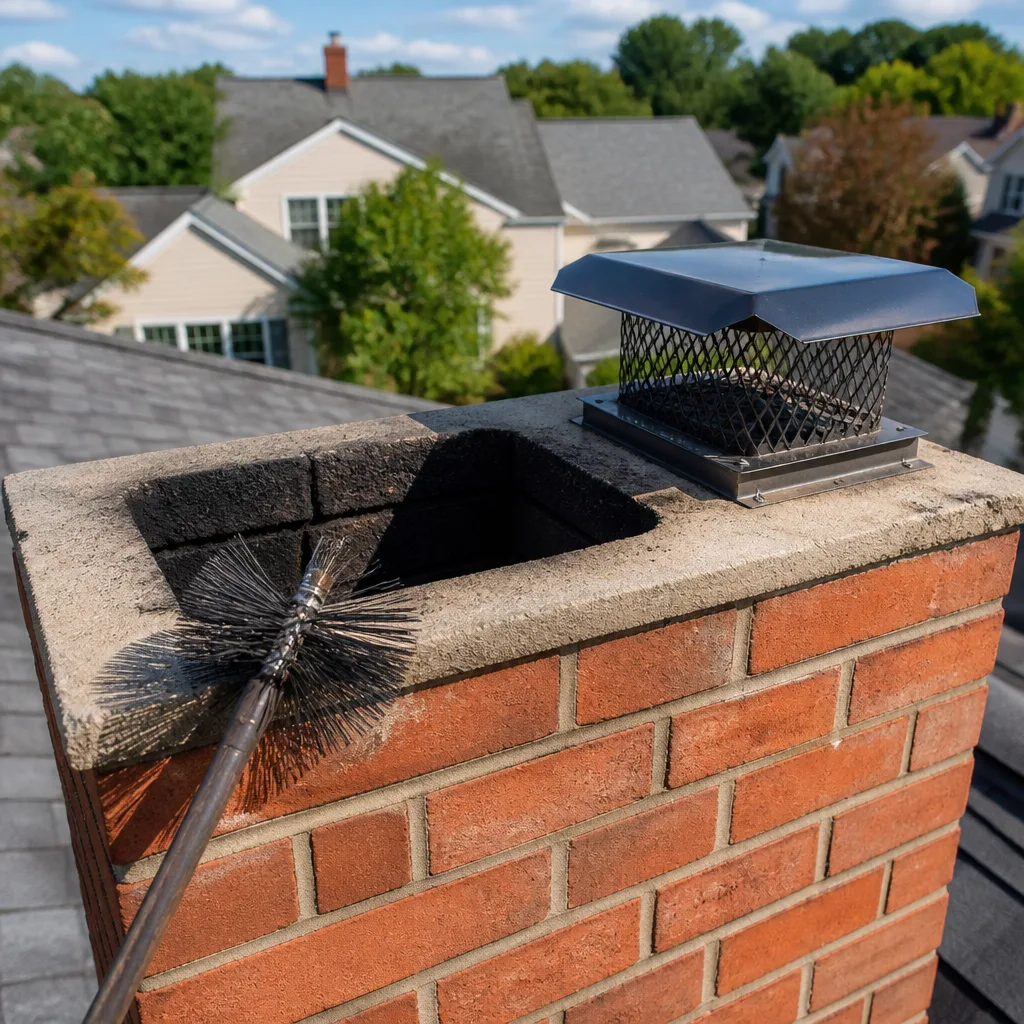
Chimney sweep logs do not sweep chimneys. They loosen some creosote - which then falls where a brush and vacuum still have to collect it.
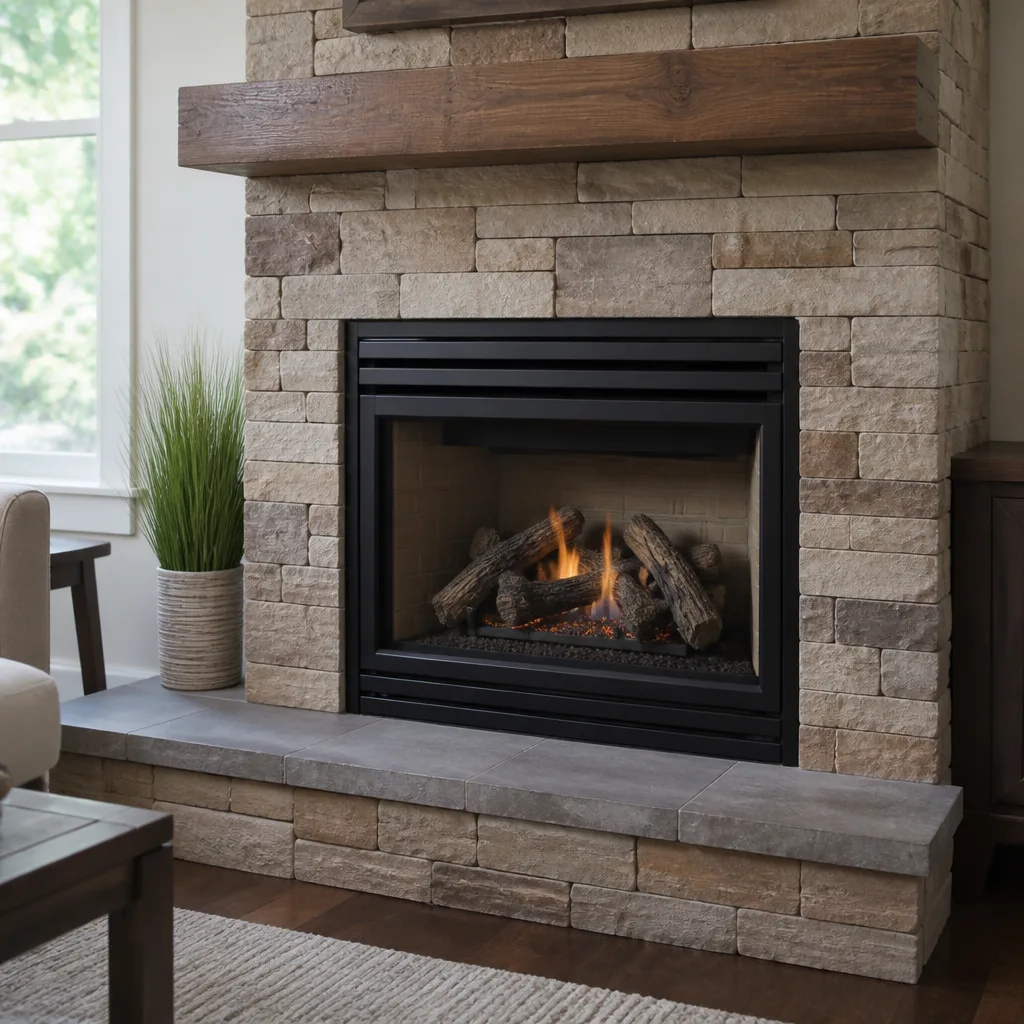
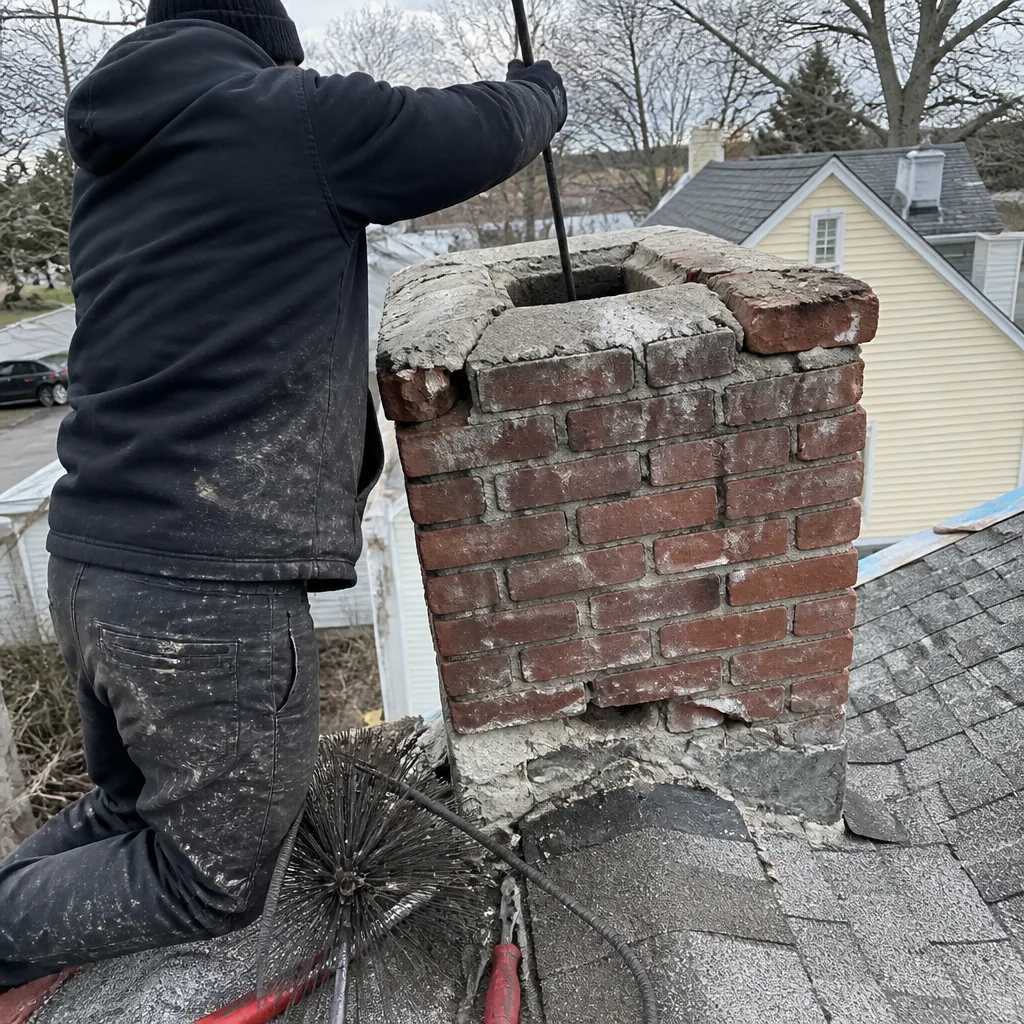 Before
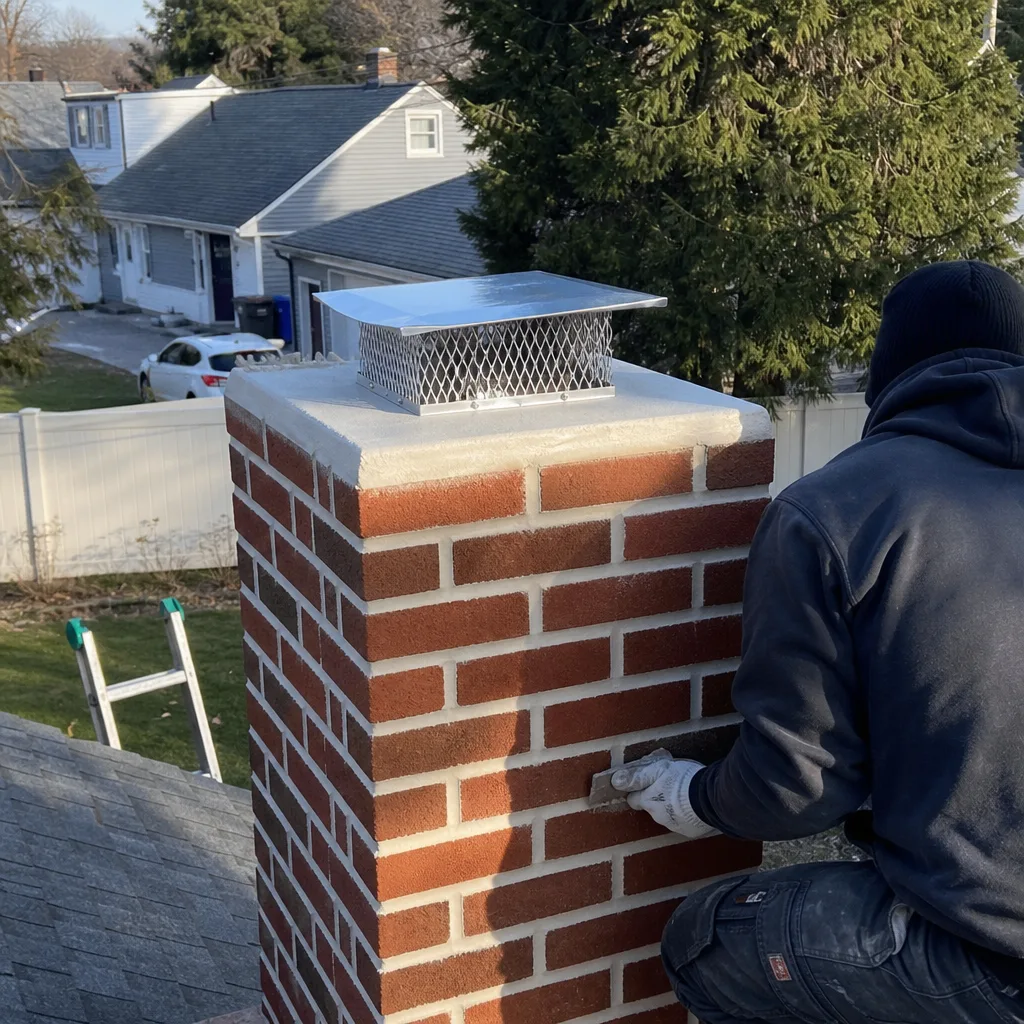 After
After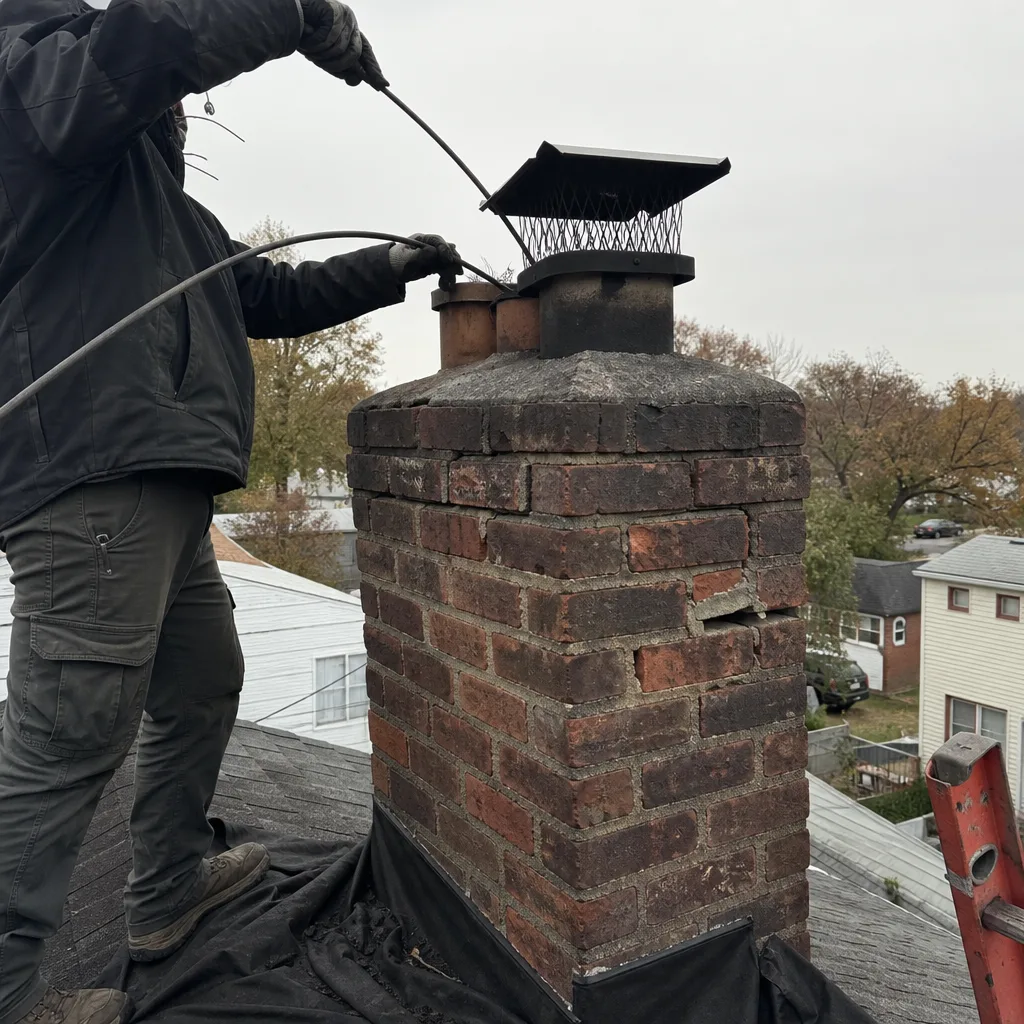 Before
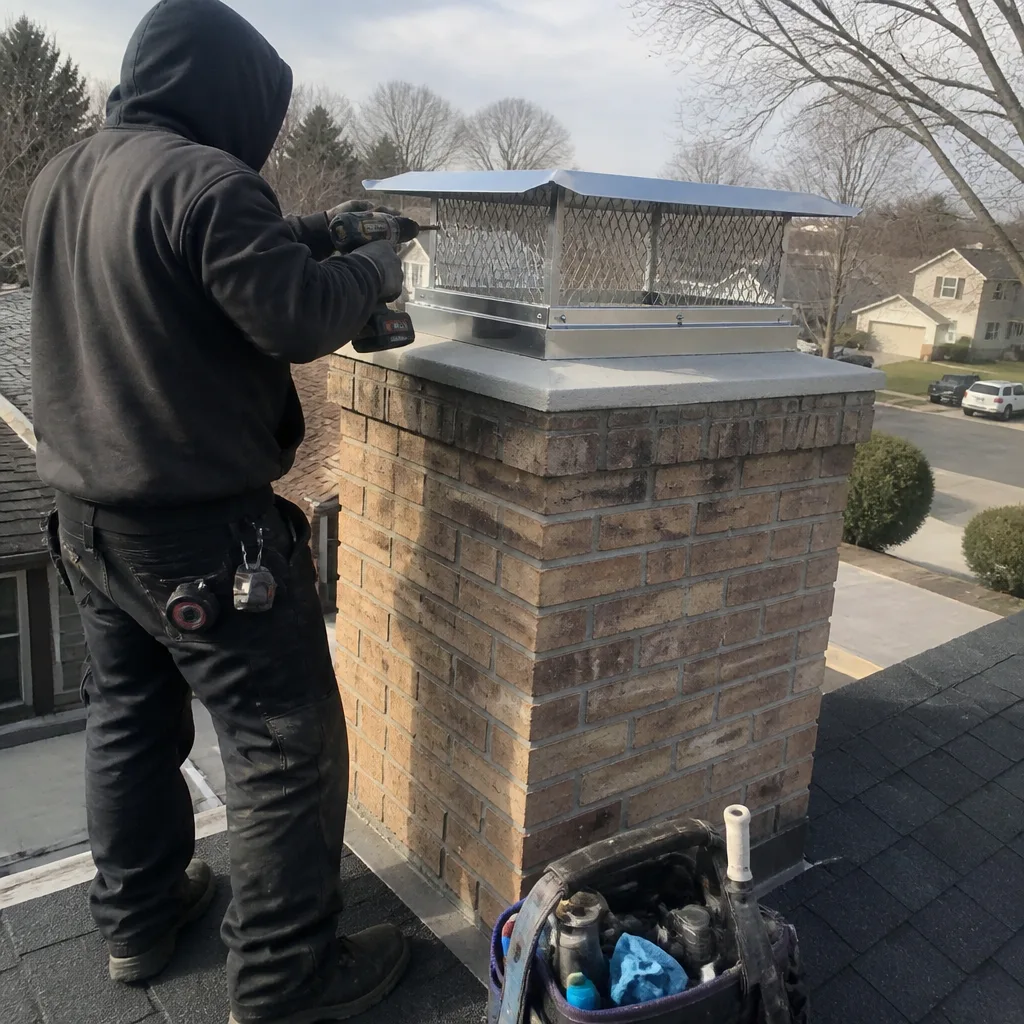 After
After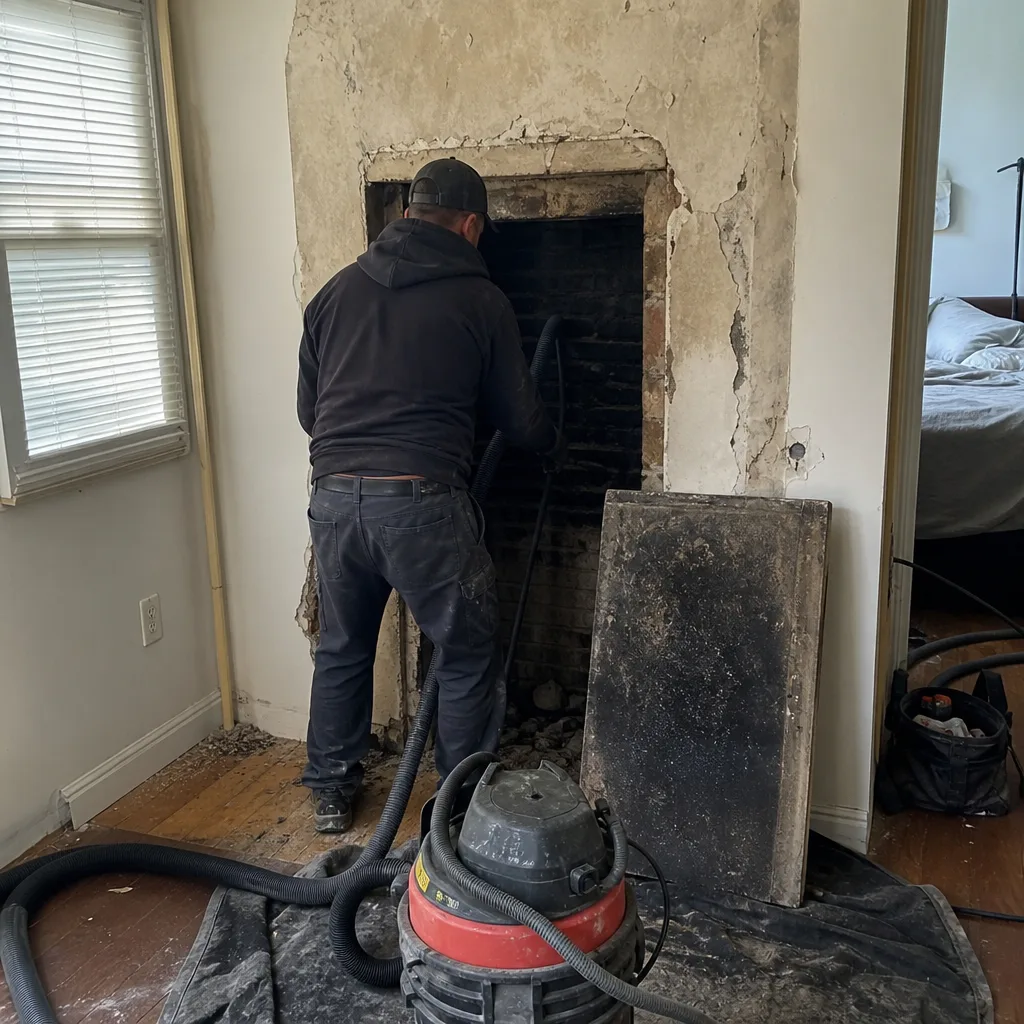 Before
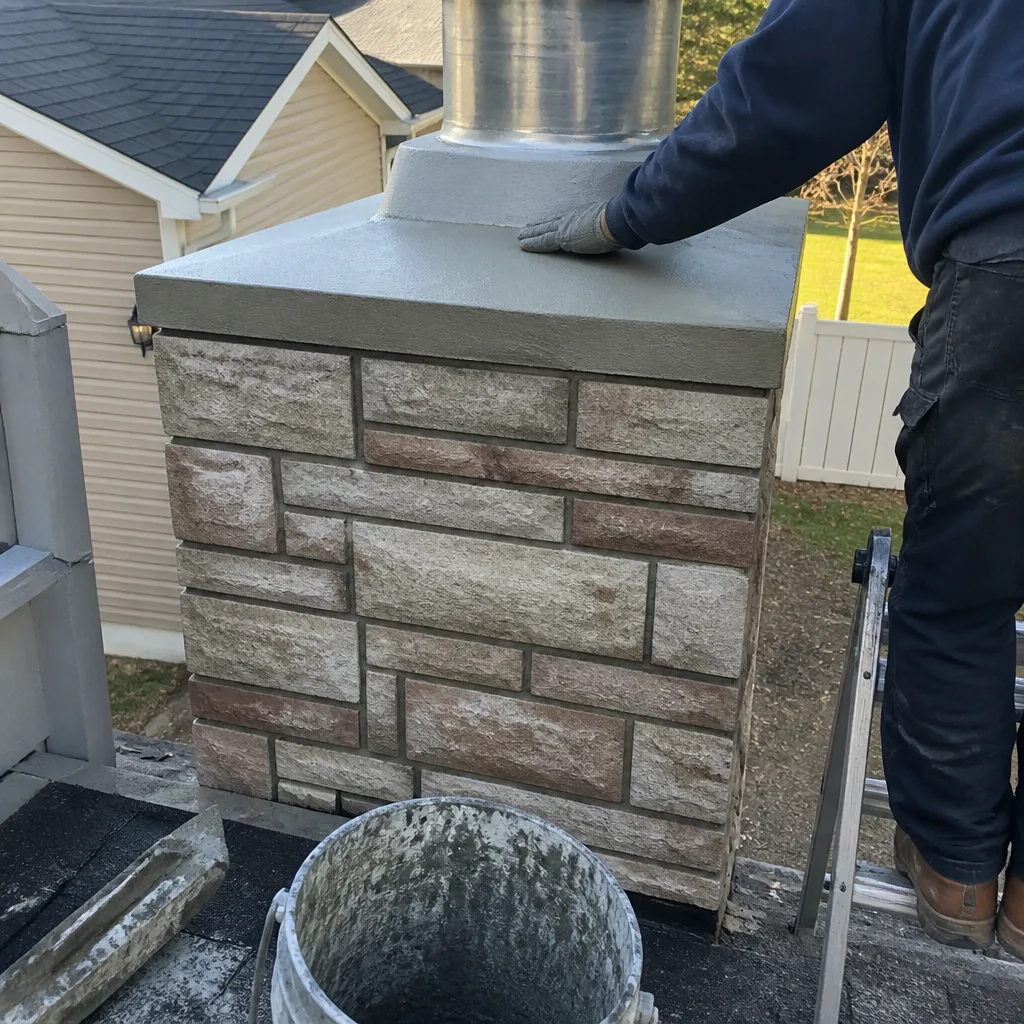 After
AfterChimney Cleaning Permits, Codes & Inspections in NY: What You Need to Know
The word “permit” scares people off repairs they should do and doesn’t warn them about the ones that actually require one. In Nassau County, a relining job done without a permit can void your homeowner’s insurance claim if there’s ever a fire. That’s the line most homeowners never get told, and it’s the one that matters most. Our Complete Guide to Chimney Cleaning in Hempstead draws that line clearly, between the routine sweep that keeps your flue breathing and the structural work that carries legal weight in New York State. If you own a home in Hempstead or anywhere else in Nassau County, the difference between a cleaning and a code-governed repair is something you need to know before the first tool comes off the truck.
Quick Answer
Chimney cleaning itself does not require a permit anywhere in New York State - it falls under routine maintenance, not construction. But many of the repairs a cleaning visit uncovers, including liner replacement, masonry rebuilds, and crown work, do require a building permit under the New York State Residential Code and Nassau County’s local amendments. A permit is not a tax on honesty; it’s the document that keeps your homeowner’s insurance valid if something goes wrong later.
Table of Contents
- Cleaning vs. Repair: Where the Permit Line Actually Falls
- The Specific NYS Code Citations That Govern Chimney Work
- How Nassau County Amends the IRC for Chimneys
- What a Chimney Sweep Can Do Without a Permit
- Five Chimney Jobs That Require a Permit in New York
- Level 2 Inspections and Your Homeowner’s Insurance
- Who Gets Cited: Contractor vs. Homeowner Responsibility
- What to Do When a Previous Owner Skipped Permits
- Common Mistakes to Avoid
- When to Call a Professional
- Frequently Asked Questions
- The Bottom Line
Cleaning vs. Repair: Where the Permit Line Actually Falls
A chimney sweep in New York State is exactly what it sounds like: the removal of soot, creosote, and debris from the interior of the flue. No municipality in Nassau County, including Hempstead, requires a permit for this work. It’s maintenance, the same category as cleaning your gutters or changing your furnace filter. The New York State Residential Code does not list chimney sweeping anywhere in its administrative provisions, and Nassau County has not added it through local amendment.
Repair is a different animal. Once you’re replacing components, altering the structure, or changing how the chimney performs, you’ve crossed from maintenance into construction. Construction work in New York is governed by the Uniform Code and the New York State Residential Code, which adopts and modifies the International Residential Code (IRC). Chapter 1 of the Residential Code, covering administration, assigns the building official the authority to require permits for any work that constitutes construction, alteration, repair, or removal.
Here’s the practical test I tell homeowners in Hempstead: if the work involves removing a failed component and putting the same component back from the truck, that’s usually repair but may still fall under permit requirements depending on the component. If the work involves changing the size, material, or configuration of the flue, it’s alteration, and it requires a permit. A stainless steel liner replacement is the classic example. The old clay tile liner is failing. You’re not patching it; you’re installing a entirely new liner system. That’s an alteration to the venting system for a solid-fuel appliance. In Nassau County, that requires a permit. Period.
Why the line matters: insurance. Your homeowner’s policy covers sudden and accidental events, but it also carries an exclusion for damage caused by work done without required permits. If you reline a chimney without a permit and that chimney later has a fire that spreads to the structure, the adjuster will ask for the permit. If you don’t have one, the claim can be denied. Not reduced. Denied. This is not a hypothetical. We’ve seen it happen to a homeowner in Baldwin, and once an adjuster flags unpermitted work, the whole claim gets scrutinized, not just the chimney portion.
The Specific NYS Code Citations That Govern Chimney Work
When a building inspector in Nassau County opens his code book for a chimney project, these are the sections he’s checking. Each one has teeth, and each one is a place where contractors who cut corners get caught. You don’t need to memorize these, but you should know they exist, because an inspector will cite them by number, and you’ll want to know the sweep who did the work is familiar with them.
- R101.2 and R101.3 (Scope and Intent) - These sections establish that the Residential Code applies to all detached one- and two-family dwellings and townhouses, and that it governs construction, alteration, and repair. Your chimney is within scope. There’s no exclusion for chimneys anywhere in Chapter 1.
- R105.1 (Permits Required) - The core permit trigger. It states that no person shall construct, enlarge, alter, repair, or remove any building system or component without first obtaining a permit from the building official. “Repair” is in that sentence. Whether a specific repair rises to permit level is a judgment call the building official makes, and in Nassau County, the default answer for structural chimney work has become “yes, permit required.”
- R1001 through R1009 (Masonry Chimneys) - This is the heart of the chimney code. It covers wall thickness, flue liner requirements, clearances to combustibles, footing requirements, and termination heights. R1003.1 says every masonry chimney shall have a flue liner. If your cleaning reveals a missing or cracked liner, you are now outside code compliance, and the repair to bring you back into compliance is permit-governed work.
- M1801 (Chimneys and Vents for Factory-Built Fireplaces) - This section governs the installation of prefabricated and factory-built chimney systems. If you’re replacing a prefab chimney on a zero-clearance fireplace, this is the section that applies, along with the manufacturer’s listed instructions, which become code by reference.
- R1003.3 (Chimney Clearances) - This one gets violated more than any other in older Nassau County homes. It requires specific clearances from the chimney exterior to combustible framing, and when a chimney is being rebuilt or relined, the inspector will check this. An existing chimney that’s been there for eighty years gets grandfathered until you work on it. The moment you pull a permit for a liner, the inspector can require you to address clearance deficiencies he finds.
What most homeowners in Hempstead don’t realize is that the code does not just govern permits. It also governs the performance standard for the work itself. A chimney sweep can clean a chimney to bare terra cotta, but if the flue was under code for clearance to combustibles, the cleaning did not cure the code violation. The code applies whether or not a permit is in hand. The permit is just the enforcement mechanism.
How Nassau County Amends the IRC for Chimneys
New York State adopts the IRC statewide, but each county can file local amendments. Nassau County has filed a series of amendments that affect chimney work in ways that don’t apply elsewhere in the state. If you live in Hempstead, Uniondale, Baldwin, or anywhere else in the county, these amendments are part of the code that governs your chimney.
The most relevant amendment for chimney work is Nassau County’s stricter enforcement of the permit requirement for liner replacements and rebuilds. While some jurisdictions in upstate New York treat a stainless steel relining as a maintenance item, Nassau County does not. The county building department’s published guidance treats any modification to the venting system of a solid-fuel appliance as a permit-required alteration. This is not written in a separate amendment chapter with its own number; it’s embodied in the county’s administrative code and in the way its building officials have consistently interpreted and enforced R105.1 for the past two decades.
Nassau County also requires a licensed contractor for any chimney work exceeding what a homeowner can legally perform. Under the county’s administrative code, a homeowner may perform work on his own single-family residence without a license, but the work must still be permitted and inspected. If you hire it out, the contractor must be licensed by Nassau County. We pull permits for every liner installation we do in Hempstead, and the inspector who shows up is a Nassau County employee, not a private inspector.
One more Nassau-specific detail: the county requires a final inspection before any chimney work can be closed out. An inspector will look at the liner installation, check the top plate and cap, and verify clearances in the attic and at the firestop. If the inspector doesn’t sign off, the permit remains open, and an open permit is a lien against the property that will surface when you try to sell. I’ve seen home sales in Hempstead delayed over open chimney permits from work done years earlier.
What a Chimney Sweep Can Do Without a Permit
Here’s a plain list of what constitutes routine maintenance in the eyes of Nassau County. None of this requires a permit, and any licensed sweep can perform this work in a single visit. This is the core of our own Chimney Cleaning & Sweep Maintenance Checklist for Hempstead Homeowners, and it starts with a brush but often goes further.
- Mechanical sweeping of the flue - the removal of creosote, soot, and debris using brushes, rods, and a vacuum. This is the core service.
- Creosote treatment - for first-degree and second-degree creosote, application of a chemical treatment that breaks down the deposits for later sweeping is maintenance, not construction.
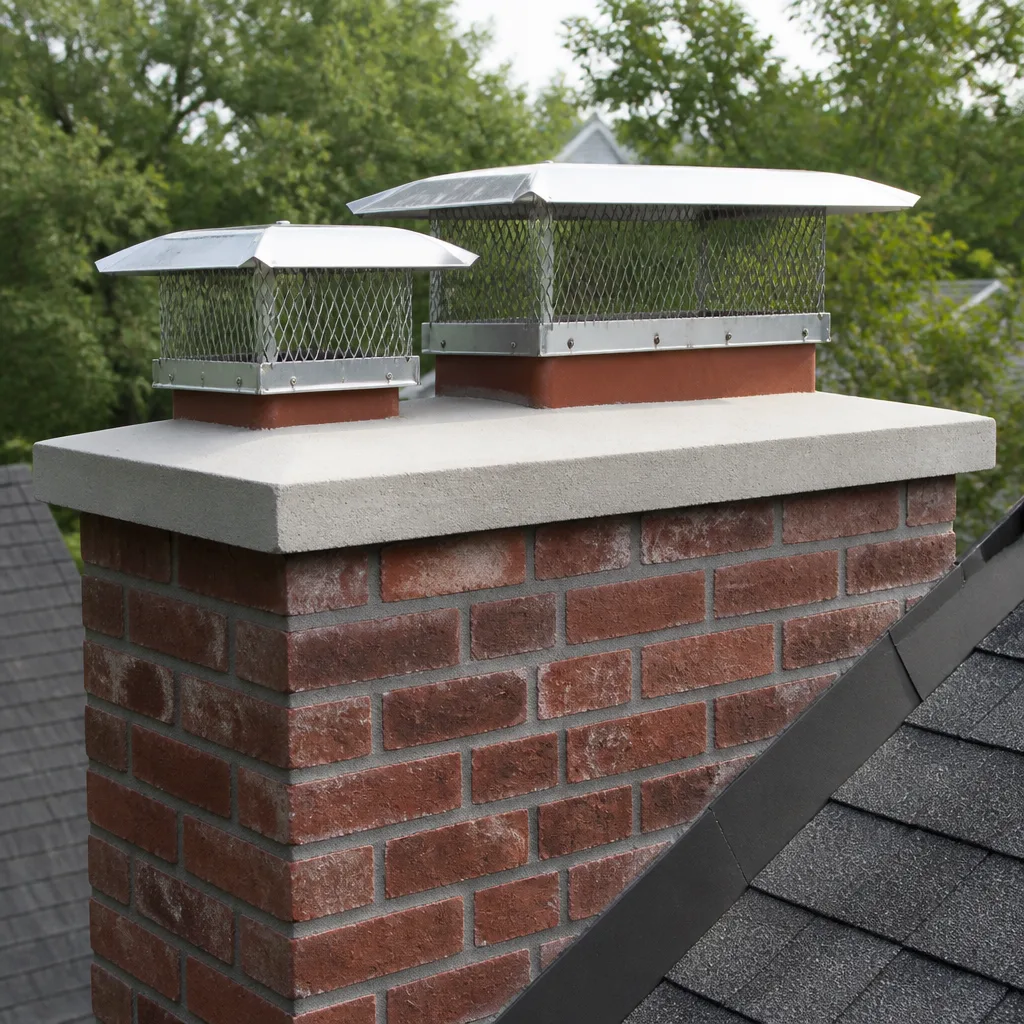
- Chimney cap installation - putting a cap on an existing flue is considered an accessory installation, not a structural alteration. Nassau County does not require a permit for caps. The cap is mounted to the flue tile or crown and does not change the structural performance of the chimney.
- Crown sealing - brush-applied or trowel-grade crown sealer applied to a crown that is not structurally failed is a maintenance action. If the crown is fully rebuilt, that’s repair, and the permit line moves.
- Damper replacement - replacing a throat damper or installing a top-sealing damper on an existing flue does not require a permit. The damper is an accessory, not a structural component.
- Level 1 and Level 2 inspections - visual inspection, video scanning, and documenting conditions require no permit. An inspection tells you what needs doing; it doesn’t do anything itself.
One caveat worth stating clearly: the fact that no permit is required does not mean no standard applies. A sweep is still obligated to perform the work to professional standards, and the National Fire Protection Association’s NFPA 211 remains the defining document for chimney inspection and cleaning. Your flue doesn’t care how the fire looks. It cares how it breathes. A permitted job done poorly is still a poor job. A maintenance job done well is still bound by the same NFPA 211 standard.
Five Chimney Jobs That Require a Permit in New York
These are the jobs where the permit line gets crossed. Every one of them is a job we perform in Hempstead, and every one of them gets a permit pulled at Town of Hempstead building department before the first brick moves. If a contractor tells you any of these don’t need a permit in Nassau County, get a second opinion. The building department’s number is public, and they’ll answer the question directly.
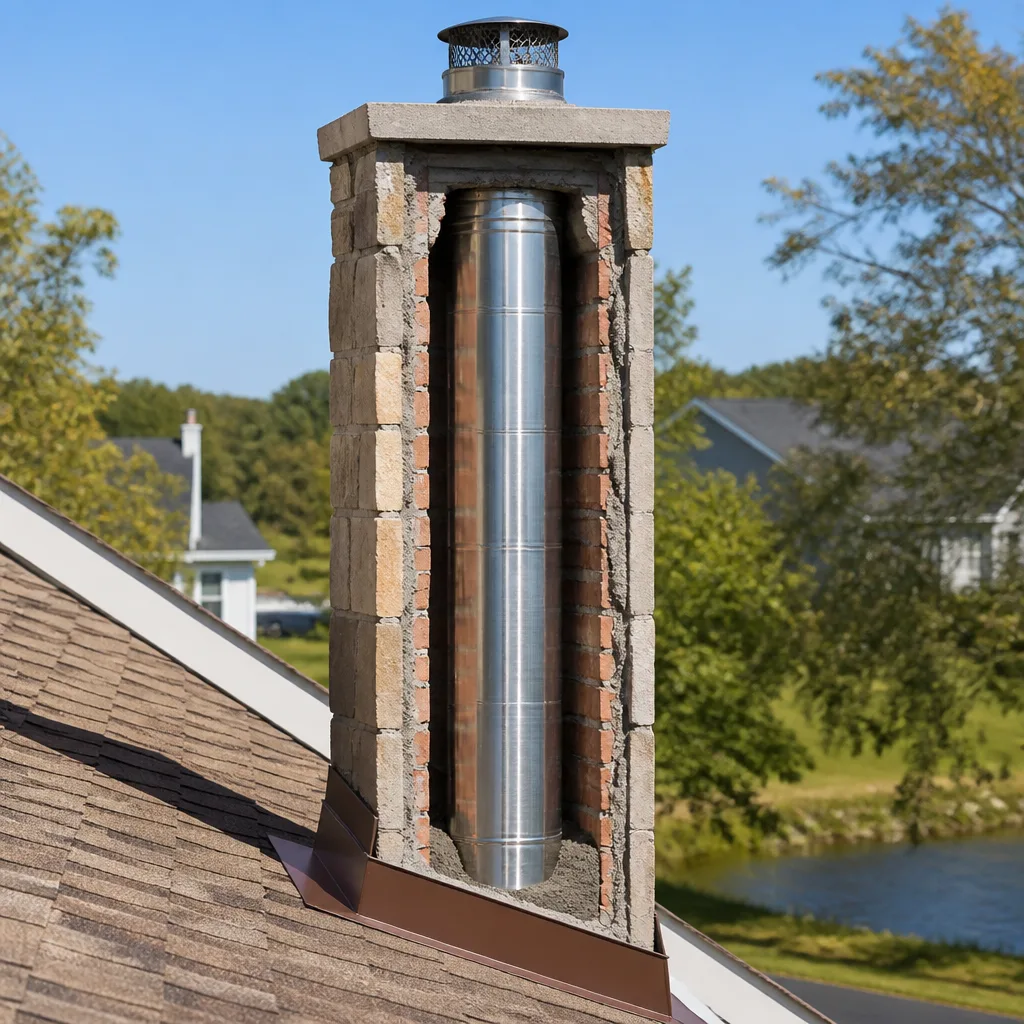
- Flue liner replacement or relining - whether stainless steel (we install DuraFlex systems) or a poured-in-place product like HeatShield, replacing a failed liner is an alteration to the venting system of a solid-fuel appliance. Nassau County requires a permit. No exceptions. The permit requires a plan review in some cases and always a final inspection. In Hempstead, we submit the manufacturer’s listing documents with the permit application.
- Masonry rebuild of the chimney above the roofline - taking down and rebuilding a chimney crown, corbel, or a run of bricks from the roofline up is structural repair. The IRC and Nassau County both treat this as permit-required. If the rebuild exceeds 25% of the chimney structure, some inspectors will additionally require an engineered drawing.
- Fireplace firebox reconstruction - rebuilding a firebox with new refractory panels or new firebrick changes the dimensions and thermal performance of the firebox. This is a permit-required repair. The code provision is R1001.11, which governs firebox construction, and R1004 for factory-built fireplaces.
- Chimney tear-down and full rebuild - any full removal and reconstruction of a chimney is explicit construction. This requires a permit, often a demolition permit if the chimney is being removed entirely, and inspections at footing, mid-wall, and final stages.
- Conversion of a wood-burning fireplace to gas - installing a gas log set, a gas insert, or a direct-vent gas fireplace into a chimney originally built for wood changes the appliance class and the venting requirements. The gas line work requires a licensed plumber, and the venting modifications require a permit. This is one of the most commonly skipped permits in Nassau County, and every time the installer leaves without one, it lands back on the homeowner at resale.
The permits for these jobs in Hempstead are not optional hoops to jump through. They’re the paper trail that proves the work was done to code, inspected by a county official, and safe to operate. When we install a liner, the homeowner gets a copy of the closed permit along with the manufacturer’s warranty. Those two documents together are what the insurance company will ask for if there’s ever a claim. We’ve installed liners in homes all over Nassau County, and not once has an inspector waived the permit requirement on a liner replacement. Not once.
Level 2 Inspections and Your Homeowner’s Insurance
A Level 2 inspection is a video scan of the flue interior, usually performed after a chimney fire, after an earthquake, or when a property changes hands. In Hempstead and throughout Nassau County, real estate transactions frequently trigger a Level 2 inspection as a condition of sale. The findings from that inspection become a document that follows the property.
Here’s what most homeowners don’t know: if a Level 2 inspection finds a cracked flue liner, missing mortar joints, or any condition that creates a fire hazard, and you choose not to repair it, you have a disclosure obligation. Your homeowner’s insurance policy contains a condition requiring you to maintain the property in insurable condition. A known chimney defect, documented in writing, that you ignore can void coverage for any loss related to that chimney. The insurance company’s adjuster will ask for maintenance records if there’s ever a fire, and a Level 2 inspection report showing an unrepaired defect is exactly what they’re looking for.
The reverse is also true: a Level 2 inspection that comes back clean is a useful document. Keep it. It’s evidence that you maintained the chimney to professional standards, and it functions as a dated baseline for any future claims. We include a written report with any chimney cleaning and sweep in Hempstead that includes a Level 2 scan, and the report is yours to keep. The camera footage and a plain-English verdict - every time, no exceptions.
One more insurance angle worth knowing: some homeowner’s policies in Nassau County now require a chimney inspection before issuing or renewing coverage on homes with wood-burning fireplaces. This is a relatively new underwriting trend, and it’s catching homeowners off guard. If you get a letter from your carrier asking for a chimney inspection, that’s not a courtesy. It’s a condition. We’ve performed dozens of these pre-renewal inspections, and the report format matches what the carriers ask for: condition of liner, presence of cap, clearance verification, and photographs.
Who Gets Cited: Contractor vs. Homeowner Responsibility
Here’s the part nobody tells you: if unpermitted chimney work is done on your property in Nassau County, the homeowner is the one who gets cited. Not the contractor. The property owner is responsible for ensuring that all work on the property is properly permitted, and the building department’s violation notice comes addressed to you. The contractor may also face penalties, including license sanctions, but the violation and the daily fines attach to the property.
This creates a perverse incentive structure, and you should understand it. A contractor who proposes to do permit-required work without a permit is saving himself time and paperwork. You’re the one carrying the legal exposure. If the work is later discovered, whether through a neighbor’s complaint, a code enforcement sweep, or a home inspection during sale, it’s your problem to fix. The fix usually involves opening the wall or exposing the work for inspection, which means undoing and redoing whatever was done. That cost lands on you, and you’ll be lucky if the original contractor answers the phone.
When we do permitted work in Hempstead, the permit is in the homeowner’s name. We prepare the application, submit the drawings, pull the permit, and schedule the inspections, but the permit itself belongs to you. That’s how it should be: the permit is your protection, not our burden. Wendell and his crew have been doing this since 1999, and the process is second nature now. The permit application goes in, the work gets done, the inspector signs off, and you get a closed permit for your records.
The contractor’s responsibility, in addition to performing the work correctly, is to ensure the permit is actually obtained. A contractor who tells you “we’ll handle the permit” but never pulls it has not handled anything. Ask for the permit number before work begins. You can verify it with the Town of Hempstead building department by phone. If the number doesn’t verify, don’t let the work start. Ask anyone on your street. The people who got burned all skipped this one step.
What to Do When a Previous Owner Skipped Permits
This happens more often in Nassau County than anyone wants to admit. You buy a home in Hempstead, the previous owner had chimney work done years ago, and during your first chimney cleaning, the sweep finds evidence of unpermitted work: a liner that was never registered, a firebox that was rebuilt without inspection, a chimney that was relined and the permit was never closed. Now you own the problem.
The first thing is to not panic. The second thing is to understand your options, because you have three. Here they are, in order of what we typically recommend.
- Document what you have. The sweep who found it should provide a written report describing the condition and his professional assessment. This report may be the only evidence you have of what was done and when. We provide this report automatically on every inspection, along with video footage. Keep it.
- Get a retroactive permit where possible. Nassau County has a process for this, called permit after the fact. You file the permit application as if the work were new, disclose that the work was already performed, and request an inspection. The inspector will assess whether the work meets code. If it does, you get a permit closed out and the disclosure problem goes away. If it doesn’t, you find out what needs fixing to bring it to code.
- Repair or replace to current code. If the unpermitted work fails inspection, the repair to bring it into compliance requires a permit anyway. This is a common outcome on older houses where a previous owner used a friend-of-a-friend who installed a liner without a permit and without following the manufacturer’s listed instructions. We see this pattern in Hempstead regularly: a liner that sags, a top plate that was never sealed, a firestop that doesn’t exist. The fix is a new, permitted liner installation.
The worst option is to ignore it. An unpermitted chimney modification is a disclosure item when you sell. You will either disclose it proactively, in which case the buyer will demand a repair credit, or you won’t, in which case you’re exposed to a misrepresentation claim after closing. Neither is worth it. We’ve helped dozens of homeowners in Hempstead resolve exactly this situation, and the sooner it’s in a permit file, the sooner it’s off your mind.
Common Mistakes to Avoid
- Assuming a sweep is a repair. In New York, sweeping is maintenance and needs no permit. But the moment the sweep on site finds a cracked liner and proposes a replacement, you’re in permit territory. Many homeowners conflate the two because the same person does both jobs. We do both, and we pull permits for the parts that require them. The distinction matters for your insurance.
- Letting the contractor “handle the permit” without ever seeing a permit number. If a contractor in Nassau County tells you the permit is being handled, ask for the number. If he can’t produce one, the work hasn’t been permitted. A verbal assurance is worth nothing in front of an insurance adjuster.
- Skipping the final inspection. Pulling a permit for a liner replacement in Hempstead and then never calling for the inspection is nearly as bad as never pulling the permit at all. An open permit clouds the title. The work isn’t code-approved without the inspection sign-off, and an open permit shows up in a title search.
- Using a non-licensed contractor because he’s cheaper. Nassau County requires a license for chimney work beyond routine maintenance. A non-licensed operator isn’t insurable, his work isn’t warrantied by any enforceable means, and if he disappears, you own the liability. The $200 you saved on the front end can become $2,000 in tear-out and redo on the back end.
- Ignoring a Level 2 inspection report that recommends repair. Once you have a written report flagging a code violation or a fire hazard, and you ignore it, you’ve changed your insurance equation. You now have knowledge of a defect. A fire that follows is no longer a sudden and accidental event; it’s a maintenance failure with a paper trail.
- Doing the permit-required work yourself without pulling a permit. You’re legally allowed to work on your own single-family home in New York, but the permit requirement doesn’t disappear because you’re the one holding the trowel. A homeowner-performed liner replacement without a permit is just as non-compliant as a contractor-skipped permit. And when it fails, you have no one to call.
When to Call a Professional
If your chimney has never been inspected, or the last cleaning was more than a year ago, call a licensed sweep and get a baseline. Once a year, burn or no burn. Chimneys break in the off-season too. If you’re buying or selling a home, a Level 2 inspection is the single best money you’ll spend on the transaction. If you know or suspect that previous work wasn’t permitted, get a sweep who understands the Nassau County process to assess where you stand. And if your chimney has had a fire, even a small one, stop using the fireplace and call immediately. The damage from a chimney fire is hidden in the flue, and the next fire is the one that reaches the framing.
Top Hat Chimney offers free estimates in Hempstead and the surrounding Nassau County communities. Call (516) 963-1068 and you’ll get a live person, not a voicemail box. Wendell himself has been serving these communities since 1999, and he’ll tell you straight whether the job needs a permit, whether it can wait, and what it should cost. The number you hear on the phone is the number on the invoice.
Frequently Asked Questions
No. Chimney sweeping is routine maintenance and does not require a permit anywhere in New York State, including Hempstead and all of Nassau County. A permit is only required when the work involves construction, alteration, or structural repair, such as liner replacement or a masonry rebuild. If your cleaning turns up a problem that needs repair, the repair is what triggers the permit, not the cleaning itself.
A standard chimney cleaning in Hempstead typically runs between $150 and $300, depending on the condition of the flue and whether you’re also having a Level 2 inspection done. We quote an upfront price before we start, and that price doesn’t change at the door. Call (516) 963-1068 for an exact quote - estimates are free.
If a liner replacement done without a permit is later discovered, the building department can issue a violation with daily fines, and your homeowner’s insurance can deny a fire claim related to the chimney. The fix usually requires opening the work for inspection, which means removing and reinstalling the liner. In Nassau County, the homeowner carries the legal exposure, even if the contractor was the one who skipped the permit.
Once a year, regardless of how much you burn. Creosote builds up even with light use, and the off-season is when water and animals do their damage. The National Fire Protection Association recommends annual inspection and sweeping as needed, and that’s the standard we apply. If you burn more than two cords of wood each winter in Hempstead, you may need a mid-season sweep as well.
Call the Town of Hempstead building department and request a property file search. The address will show all permits pulled and their current status. If you find work was done and no permit exists, you can file for a permit after the fact and bring the work into compliance. We help homeowners with this process regularly, and the earlier you catch it, the easier it is.
Some carriers in Nassau County now require a chimney inspection before issuing or renewing a policy on a home with a wood-burning fireplace. The requirement usually comes as a letter from the carrier, and it’s a condition of coverage, not a suggestion. The inspection report we provide matches what carriers ask for: liner condition, cap presence, clearances, and photos. Call (516) 963-1068 and we’ll walk you through what your carrier needs.
The Bottom Line
Chimney cleaning doesn’t need a permit in New York. The repairs that often follow do. Learn the line between the two, verify that your contractor is licensed by Nassau County, and never let permit-required work proceed without a permit number you can confirm. The permit is not burden; it’s the document that protects your insurance claim, your home sale, and your family’s safety. In Hempstead, where homes run old and chimneys run older, the line between maintenance and construction is the line between a routine fall cleanout and a problem that surfaces years later at the worst possible time. For more guides & resources, visit our blog. We’ve been drawing that line for homeowners since 1999, and we draw it the same way every time: plainly, on paper, before any work starts.
Written by Wendell Pike, Owner at Top Hat Chimney, serving Hempstead since 1999.